Quick update to below: I am currently writing a paper on Stein’ circle of female friends and will give publication details shortly.
I realise it has been a while since I posted anything. I have several posts in progress and am listing them below, both to remind myself and just in case anyone reading this is very keen on any particular topic. If so, let me know in the comments and, if possible, I will move it up to the top of the list (although it will also depend on how much research is remaining).
Stein’s Circle of Female Friends
Janet Ross, correspondent with Stein from Italy. Drawing from her biography by Ben Downing
Aurel Stein is often presented as rather solitary with only a few close male friends. In reality, he readily made friends of many of the women he encountered in his professional and personal life. This post looks at some of these women and their friendships with Stein.
Stein and Jiang Xiaowan: A Lasting Friendship
In 1906 when Aurel Stein (1862–1943) arrived at Kashgar for his Second Central Asian Expedition (1906–8) he was to meet Jiang Xiaowan, his Chinese interpreter for the expedition. Over 18 months of travelling together they became friends. Although they had only a few opportunities to meet again this was a friendship that endured until Jiang’s death. As Jeanette Mirsky noted in her 1977 biography of Stein, this was ‘a true friendship, the equality that united despite differences in culture, language, and status’ [298] And, as she further notes, of all the friends Stein made on his expeditions, Jiang ‘was the closest.’ [299]
Early Exhibitions of Stein, Part 6: 1925–26: Objects Brought by Sir Aurel Stein from his Third Expedition to Central Asia
Continuation of the series: I have a couple more to add after this.
Amluk dara in June 2024 with the remains of monastic buildings behind. Photograph: John Falconer.
Amluk Dara, literally ‘wild persimmon hill’, is used to name a Buddhist stupa and monastic complex in the Swat valley in northwestern Pakistan. It was visited, drawn, photographed and partially excavated by Aurel Stein during his tour to Swat in March 1926 and then by Berger and Wright in 1938. Restoration was carried out in 1958-9 by the Department of Archaeology and Museums, Pakistan and again in 1968, when the stupa was also studied by Italian archaeologists and Kuwayama, But its was not until between 2012 to 2015 that systematic excavation took place. This was carried out by the Italian Archaeological Mission led by its Director, Luca Olivieri (Olivieri 2014). Reading Stein’s account and the detailed Italian report led me to make the stupa focus of one of my chapters in Silk, Slaves and Stupas, published in 2019. I also had the opportunity then to visit the stupa and many other Buddhist sites in the Swat valley as a guest of the Italian Arcaheological Mission to Pakistan (ISMEO) and wrote about it in an earlier blog post. I returned earlier this year.
Further Discoveries The stupa and its surrounding structures, which were relatively easily accessible and left in excellent state by the Italian archaeologists, become a draw for groups of tourists, especially those interested in Buddhism. In 2019–2020, DOAM, Khyber Pakhtunkhwa carried out a further excavation of the site uncovering new structures and sculptures, mostly relief panels (Samad et al. 2021 and Yousaf 2022). However, the heavy rainfall and subsequent floods in Swat in 2022 resulted in notable damage, such as the erosion of the earth wall at the edge of the excavations. The terrace, which had been restored and made safe, is now fragmentary in areas, and part of the stupa is in disrepair.
The excavated area at the base of the main stupa showing the flood damage to the far side of the trench. Photograph: John Falconer.
There were signs of work at the site, and it is hoped that this damage will be addressed quickly. As one of the most notable and striking sites in the Swat, nestling in the shadow of Mount Ilam, it is hoped the stupa made suitable again for tourists to visit to learn about the Buddhist history of this important Silk Road kingdom.
Thanks to Luca Olivieri for enabling this visit, colleagues are the Mission for hosting us, Shafiq for generously and enthusiastically sharing his immense knowledge and taking us to numerous archaeological sights and rock carvings, and to John Falconer and Alice Caselini for their excellent company, photography and insights.
Note: The banner photograph for this blog is of Amluk dara looking down the valley taken during this visit.
Bibliography
Abdul Samad, M. W. 2021. Amlukdara Swat Excavation and Conservation Report 2019-2020. Directorate of Archaeology and Museums Goverment of Khyber Pakhtunkhwa Peshawar.
Berger, Evert and Philip Wright. 1941. Excavation in Swat and Exploration in the Oxus Territories of Afghanistan. Government of India Press. Rpt . Sri Satguru Publications 1985.
Olivieri, Luca M. 2014. The Last Phases of the Urban Site of bir-Kot-Ghwandai (Barikot): The Buddhist Sites of Gumbat and Amluk-Dara (Barikot). Lahore: Sang-e-Meel Publications.
Celebrating the 25th anniversary of the Sainsbury Institute for the Study of Japanese Arts and Culture (SISJAC), the Nara to Norwich online exhibition is now complete. The 142 exhibits illustrate the introduction of new religions at the ends of the Silk Roads—Buddhism in Korea and Japan, and Christianity in Britain and Scandanavia—and the subsequent changes in the life, landscape and material culture of these places.
Originally intended to be held in the Sainsbury Centre in Norwich, COVID disrupted our schedule and forced us to rethink. We decided to go online instead, by then knowing of the exhibitions planned at the British Museum and British Library. We met with colleagues from both institutions to discuss our respective ideas and kept in touch throughout the process. Going online allowed us more flexibility to include objects which would have been impossible to loan and to make landscapes central to the story. But the exhibitions at the BM and BL also meant that some of the objects in Nara to Norwich were being showcased in their exhibitions as well, such as the Helgo Buddha and the Dunhuang star chart.
Thanks to a collaboration with Hase Temple (総本山長谷寺) in Japan, in May 2024 we loaned a 12m tall digital replica of their Miei Daigajiku watercolour of Kannon—the bodhisattva Avalokitesvara—to hang in the Forum in Norwich during the week of the Norfolk and Norwich Festival. The original watercolour, 16.5m long and 6.2m wide, was made after a statue of the bodhisattva Kannon (Avalokiteśvara) in the temple was destroyed by fire in 1495. The original scroll was intended as a model for the reconstruction of the statue, almost in actual size. It was completed during the Edo period (1603–1867). The digital scroll was installed in late evening when the Form was closed to the public: see the video.
It has been an immense pleasure to work with colleagues in Norwich and worldwide on this project over the past five years. We are now discussing a programme of research, events and publications for the coming 2-3 years.
Delighted to see the inaugural issue of the new journal, Silk Roads Archaeology and Heritage edited by colleagues at UCL, Institute of Archaeology. Also relieved that it has provided a home for an article of mine long in the making, as well as for excellent articles and reports by other scholars. Several papers are already available online, and others will appear shortly. Congratulations to the editors for their excellent work on producing what promises to be a major source of scholarship in this ever-expanding field.
Helen Wang and I were invited to be guest editors of this issue to bring together articles and reports on Aurel Stein and the Silk Roads. Having worked together on several projects relating to Stein, his collections, and the Silk Road, we were keen to highlight more recent developments by both our generation and a newer generation of curators, conservators and other scholars. We dedicated the journal to Dr Binoy Kumar Sahay, long time curator of the Stein collection at the National Museum of India in New Delhi, who sadly died in 2021. He had been working on the new galleries of Stein collection paintings and other artefacts at the NMI but did not live to see their opening in May 2022. Like us, he worked on the Stein collections for about a quarter of a century, and, largely self-taught in this field, developed a very thorough knowledge of the collection, curated exhibitions and displays, and was part of its initial digitisation. He is very much missed. I hope to have a report on the new galleries ready for the next issue.
Both Helen and myself, along with other curators of material from the excavations in eastern central Asia in the early 20th century, have sought to make the Stein and other material more accessible both through conservation and cataloguing, but also by publishing lists and reports on the collections and their history. Although these are absolutely essential for navigating and understanding the collections, they are often prepared in concise formats for easy reference and do not necessarily lend themselves to publication in academic journals. Thanks to Helen, much material has been published in several issues of the British Museum Occasional Papers. This initial issue of the SRAH highlights the importance of such collaborative curatorial work and how it is fundamental for further research on the collections.
Personally, I was relieved to have a home for an article that I started years ago when curator at the British Library. This is a detailed review of the various identification systems used by Aurel Stein for the material from the Dunhuang Library Cave. Although mentioned previously by scholars such as Rong Xinjiang and used by them to discuss the contents of the cave, their work always only gave a partial explanation as they did not have access to all the archives. When Paschalia Terzi came to the Library as an Erasmus scholar, she provided an impetus by carrying out some vital archival research and suggesting a path through the intricacies of Stein’s systems. I did not have time to continue this work until the past few years after I had left the British Library. A Leverhulme Turst Emeritus Fellowship gave me the opportunity to spend considerable time in the Stein archives in the Bodleian Library to research a forthcoming book on the history of Khotan. I was able to follow up on the outstanding queries and further navigate the often confusing paths through Stein’s systems. In addition, with the help of Mélodie Doumy at the British Library—whose paper on Bonin is included in this issue—I tracked down some additional scroll wrappers from the Library Cave with annotations by Jiang Xiaowan (see below).
Paper scroll wrapper from Dunhuang, Or.8210/S.11049 with annotations by Jiang Xiaowen. The British Library.
The resulting paper is inevitably long and dense as it seeks to bring together all the disparate data on this topic so that scholars in the future do not have to do this archival research again. Instead, we hope that it will provide the foundations which will lead to new scholarship on the contents of individual bundles stored in the Dunhuang Library Cave.
NB
Been a while since I posted, but busy with travels (Japan/Korea/Pakistan), exhibitions (Nara to Norwich, online and virtual) and several other publications. More on all these to follow soon!
Terrcotta figure of pensive monkey found at Khotan, British Museum MAS.135Rhesus macaque (Macaca mulata)
Probably the most numerous and unusual finds from the first millennium Silk Road kingdom of Khotan are small terracotta figurines. And while they include animals—such as the Bactrian camel and horse—that would have been familiar travellers on the Silk Road in this Taklamakan kingdom, the most plentiful are monkeys, distant strangers to this desert oasis. Since I first included some of these figurines in my 2004 exhibition, ‘The Silk Road: Trade, Travel, War and Faith’, I have wondered about why and by whom they were modelled.1 Following conversations with colleagues at the Museum of Ethnography in Stockholm during a research visit in 2022 and, more recently, reading of archaeological finds in Afghanistan and elsewhere, I came to believe it is a reasonable assumption that monkeys were actual visitors to Khotan, both travelling as companions to merchants as depicted on contemporary models (see below), but also brought as merchandise to sell to the locals as pets. After attending the opening of a small exhibition curated by Dr Yogesh Mallinathapur of the reserve collection of Stein terracottas at the National Museum of India (see below) and discussions with curators and scholars there, I decided to explore this argument further, hence this short blog post.
Although fairly crude, there is no ambiguity about identification of these models as monkeys. As well as the obvious facial characteristics, most have medium-length tails and their fur is suggested with the incised lines. These clearly resemble the rhesus macaque (Macaca mulata), the most widespread of the Eurasian monkeys, as pictured above. The northern range of this monkey is from Afghanistan in the west, skirting the southern Himalayan foothills through Nepal and southern Tibet to the mountaineous borders of the north China plains and as far east as the Pacific. This species has a short tail but there are several other species in the region, known commonly as as stump-tail macaque, which, as their name suggests, have very short or no tails, and these are also depicted in some of the terracotta models I have seen.
Monkeys in south Asia Monkeys were very much part of the earliest myths and religions of south Asia long predating the Silk Roads. For example, the monkey appears as a divine being in the Rigveda, and then notably with Hanuman taking on various roles in the Ramayana. Numerous terracotta figurines have been found at the various archaeological sites of the Indus Valley Culture (2400–1750 BC), such as Mohenjo-Daro and Chanhuyin Jo Daro [Chanhudaro].2 Mark Kenoyer identifies them as the short-tailed rhesus maccque:
‘Figurines of monkeys were were made of terracotta or glazed faience depicting one or more monkeys in various amorous or acrobatic poses. All the monkey figurines are of the short-tailed rhesus or macaque species, but the long-tailed langurs would have been known to the Indus people living in Gujarat and the northern Punjab, because this species is quite common throughout these regions today. The fact that they did not make any figures of the long-tailed monkeys is quite intriguing, and it is also odd that no monkeys are illustrated on the seals or narrative tablets. The Harappan bias against depicting monkeys in glyptic art is one of the more important differences with later Hindu art, where monkeys are a common motif and the long-tailed langur is directly associated with the deity Hanuman.’3
The monkey’s role in south Asian literature and art continued into Buddhism. One of the most famous stories of the historical Buddha in his former incarnations, the MahakapiJataka, tells of the Buddha as a monkey king. In one episode he makes a bridge across a river by stretching his body between two trees thereby allowing his monkey subjects to escape from battle. This episode is commonly depicted, such as on the west gateway of stupa I at Sanchi, dating from c.50 BC.
Detail from west gateway of stupa I at Sanchi.
Monkeys in east Asia Both the gibbon and macaque appear in early literature and art of east Asia, surveyed by van Gulik. As he notes, although ‘monkeys were common in the southern and southwestern parts of this region, the monkey does become an important or common character in the arts and literatures of the cultures of China until after Buddhism is introduced.’4 Prior to this, the main extant references occur in Chuci, an anthology of poems from the Chu state in the southwest, bordering southeast Asia, where monkeys were prevalent.5
Two of the few known early depictions of a monkey from a Chinese context are pictured below: namely a wooden model dating from the Eastern Han (25–220) excavated at Wuwei on the route between central Asia—including Khotan—and the capital of the Eastern Han, Chang’an (Xian), and a belt hook from the same period, provenance unknown.
Wooden model of monkey, Eastern Han (25–220), excavated at Wuwei. [Watt cat. 17, p.116]
After Buddhism became prevalent in China, the macaque, in the words of van Gulik ‘became the popular image of human restless curiosity, and also of human inconstancy and trickery… [absorbing] all the rich Indian monkey-lore, introduced into China together with Buddhism.‘6 These characteristics were exemplified by the most famous monkey character in the cultures of China, namely Sun Wukong, fictional companion to the pilgrim-monk, Xuanzang.7 But the monkeys in Khotan predate his appearance.
Monkeys in the Taklamakan The depiction of monkeys in Buddhist art spread to the Taklamakan kingdoms in the first millenium AD, with paintings of the MahakapiJataka at the rock-cut temples of Kucha.
Depictions of monkey king from caves 38 and 17, Kizil, Kucha.
The monkey also appears as one of the animals in the 12-year calendar-cycle, often referred to as the animal zodiac. This is found across the Silk Roads described in texts in Sanskrit, Sogdian, Gandhari, Tibetan and Chinese, and almost certainly had a common source. It is also found in Khotan. An early 9th century Khotanese manuscript (The British Library, Or.11252/1) describes the charactertistics of those born in the various years, including the year of the monkey:
‘He will have to stay in a land far away and he will have many sons. …He will have many servants and horses’8
But the monkey figurines probably predate both these and are not found in any of the other Taklamakan kingdoms. As several scholars have noted, there are however, precedents elsewhere.
Terracotta monkey figurines Terracotta figurines are found in many early cultures across Eurasia, but the closest precedent to the monkeys of Khotan comes from earlier cultures to its west, including the Indus Valley civilisation and Bactria.9 Mark Kenoyer describes the former:
‘Figurines of monkeys were were made of terracotta or glazed faience depicting one or more monkeys in various amorous or acrobatic poses. All the monkey figurines are of the short-tailed rhesus or macaque species, but the long-tailed langurs would have been known to the Indus people living in Gujarat and the northern Punjab, because this species is quite common throughout these regions today. The fact that they did not make any figures of the long-tailed monkeys is quite intriguing, and it is also odd that no monkeys are illustrated on the seals or narrative tablets. The Harappan bias against depicting monkeys in glyptic art is one of the more important differences with later Hindu art, where monkeys are a common motif and the long-tailed langur is directly associated with the deity Hanuman.’10
However, monkeys are only one of the many animals depicted, and by no means the most common. While at Khotan we also see horses and camels, the monkey figurines well outnumber them.
The amorous poses noted by Kenoyer are also common in the Khotan examples, although moving beyond the amorous to the sexual. The point about the lack of seals in interesting, as among the Khotan finds was a garnet seal clearly depicting a monkey. The garnet would have been sourced in south Asia: many garnet seals are found as discussed by Adams et al. (2011).11 But the monkey is, as far as I know, unusual.
There is also at least one find of a tiny monkey figurine in gold from Yotkan (The British Museum, Y.004).
While the stories and images in Kucha and elsewhere in the Taklamakan could be explained by transmission of Buddhist art and artists from outside, and/or artists local copying models from Gandhara, the range of the terracotta models in Khotan clearly suggest an acquaintance with actual monkeys. So how did monkeys travel to Khotan?
Monkey Travellers on the Silk Roads As mentioned above, some of the models showing camels laden with goods also have a monkey passenger, as pictured below. It is probable that merchants took them as companions for the long journey.
Laden camel with small monkey perched on back. 7th c. Found in the tomb of Zhang Rentai (d.664) near Xian, Tang China. Shaanxi History Museum, Xian, 96.36.
But it is also possible that they were taken as merchandise: to be sold as pets.
Monkeys as pets are found in many cultures. Kenoyer suggests this role in the Indus valley to explain the terracotta models: ‘Pet monkeys were also probably a common sight in the bazaars or neighborhood markets.’ And two recent archaeological finds confirm this hypothesis, not only in central Asia, but also Egypt.
The central Asian find was on the Iranian side of the border with Afghanistan and from a grave dating in a human cemetery dating to 2800–2200 BC. A young rhesus macaque was buried in a single pit, the same as human children nearby, and the pit contained the same sort of pottery, suggesting that it was a valued pet.12 The Egyptian example is of a pet cemetery at the Red Sea port of Berenice, and date to the early years of the Silk Roads when the port regularly was visited by ships from India. The cemetery contains graves of carefully arranged rhesus macaque, and possibly other species.13
The hypothesis about pet monkeys in Khotan could be best confirmed by similar graves in Khotan. Sadly, the inundation of much of the area populated in the first millennium and the 20th-century digging for treasure, has seriously compromised most of the potential for archaeological finds. The finds, such as they are, have come from locals and others. There is no provenance and, given the material, little possibility of dating.
But even if this is verified, the question remains — why Khotan? Why do we not see similar monkey figurines elsewhere in the Tarim? One factor might be the close relationship that Khotan had with the Kushan kingdom, some scholars even suggesting that it was under their jurisdiction for some time. Angela Bellia, who has studied the various musical instruments shown being played by some of the models, argues that: ‘most of the musical instruments these protagonists handle, particularly the short-necked lute and certain types of drums, are characteristic not of the Indian, but the Gandharan musical repertoire disseminated throughout the Kushan empire.’14 It was probably also during this period that Buddhism was introduced to Khotan with its monkey stories and images, providing the environment for pet monkeys. This is speculative, but I will be exploring the relationship between Khotan and Kushan in a forthcoming article.
Acknowledgments The research visits to Sweden and India were enabled by a Leverhulme Emeritus Fellowship. Thanks to colleagues worldwide, and particularly in Stockholm, for discussion and ideas on this.
van Gulik, R. H. 1967. The Gibbon in China: An Essay in Chinese Animal Lore. Leiden: E. J. Brill.
Sukhu, Gopal. “9. Monkeys, Shamans, Emperors, and Poets: The Chuci and Images of Chu during the Han Dynasty”. Defining Chu: Image and Reality in Ancient China, edited by Constance A. Cook and John S. Major, Honolulu: University of Hawaii Press, 1999, pp. 145-166. https://doi.org/10.1515/9780824862169-011
N. Adams, C. Lüle, E. Passmore with H. Falk and N. Sims-Williams in ‘Gems of Heaven’: Recent Research on Engraved Gemstones in Late Antiquity, AD 200-600′ (C. Entwistle and N. Adams, eds). BM Research Publication 179, London, 2011, 25-38.
I’ve been in the Stein archives at the Bodleian again (checking final references for a forthcoming paper) and, as usual, ended up tempted down several rabbit holes. This blog post is the result of exploring one of the shorter and more easily navigated—written while awaiting retrieval of further material— and highlights the issues that Museums and Librarys can face when acquiring, sorting, cataloguing and caring for large, diverse collections. I will write further on this in future posts on another Dunhuang painting, mislaid, and on timelines of the acquisitions of the Stein collections.
In a letter dated 11 September 1927 to Laurence Binyon (1869–1943) at the British Museum, Aurel Stein (1863-1943) writes from India of his amazement of having received a letter from F.W. Thomas (1867–1956) at the India Office in London (The Bodleian Library, MS. Stein 65/251–2). The letter enclosed one of the paintings that Stein had acquired at Dunhuang in 1907. His surprise was compounded by the fact that Thomas had not recognized it as an original but described it as ‘an enlarged proof.’ Given that this was a fragile painting on silk it is difficult to see how Thomas could have made such a mistake. Stein is confused, but rejoices in the fact that it has reached him from London by letter post without loss or damage. It was a painting of Virūpākṣa, as shown below, with the Stein id. Ch.0040 (see forthcoming paper for a detailed discussion of these ids.).
Painting of Virūpākṣa from Dunhuang. Stein Ch.0040, NMI 99-17-001.
Stein’s acquisitions from Dunhuang and elsewhere on his second expedition (1906–1908) were originally sent to London and then unpacked, numbered and sorted in the British Museum. His expedition had been jointly funded by the Museum and India and the collections were to be duly divided and a portion sent to the India Office in London for dispatch to Delhi. This could not start until they had been unpacked and listed and this took several years. The division was discussed before and during the First World War (1914–1918) during much of which Stein was on his Second Central Asian Expedition (1913–1916). He was keen that the material remain in the Museum until his return so that he could have access to it to finish his expedition report (Serindia, published in 1921). In a future post I will give a detailed timeline of this period.
In May 1914, an exhibition opened at the British Museum of much of the material (see my previous blog post). There were two banners of Virūpākṣa listed in the catalogue: cat. 40 is described as ‘Virupaksha, King of the Western Quarter, in full armour and with a sword’; and cat. 69 has ‘Virupashka trampling on a red-headed demon.’ The latter is almost certainly the painting in question. By this time it had had at least preliminary conservation work involving mounting and backing with thin Japanese paper: it can be seen in its original state in an early Stein photograph (Photo 392/27(594)). Much of this was done in 1911–12 in preparation for the photography for Serindia. It is possible that it was also conserved further for the exhibition by conservation with silk over a light wooden frame. Further photography was carried out in London during this time but was not comprehensive owing to lack of funds and time.
The discussion over the division of the paintings continued through the war years. The list, produced largely by Raphael Petrucci (1872–1917) in 1911–14 (before he left to work at a hospital run by the Red Cross in Belgium), was adjusted and finally agreed in 1917 (Petrucci died in the same year of diptheria contracted in hospital after an operation). The material destined for India was then packed up by Florence Lorimer in the British Museum in 1918 and sent to the India Office in London to await dispatch to the proposed new museum in New Delhi. The paintings agreed for the British Museum were acquisitioned into the collections in 1919.
The Indian material was not to be dispatched until several years later. By this time the painting had been listed in Serindia (p.948 and Pl. LXXXV) and illustrated and described in The Thousand Buddhas (Pl.XXVII), both published in 1921. 1927 was Thomas’s final year at the India Office: he took up the post of Boden Professor of Sanskrit at Oxford University. It is therefore possible that came across this piece when he was sorting through material prior to his departure.
In his letter to Binyon, Stein writes:
‘As you know, I had nothing whatever to do either with the distribution (done during my absence on the third expedition) or with the packing up of the Indian share by Miss Lorimer in 1918 or its repacking by Andrews in 1923 and the handing over to you in 1924 of the paintings. I am therefore, quite unable to explain how this banner got mixed up with MSS sent to the India Office Library and how its absence from the paintings which were being catalogued in your Department remained unnoticed.’ (Bodleian Library, MS. Stein 65/251–2)
Binyon replies, suggesting that it must have been sent to Thomas before the distribution was agreed and admitting to the ‘mislaying’ of several paintings over this period:
‘It must I think have gone to him by mistake before the division was made, as it is not on either of the typed lists (Neither the IO nor the BM list). I think more than one painting was reported missing at the time. And in fact on each occasion when the collection has been handed over some items have been reported missing thought they usually reappear.’ (MS. Stein 65/253, 4 Oct. 1927)
This banner was among those that was photographed in this early years for Serindia. But many more had not, and Stein therefore had ensured that a full listing and description of the paintings and other objects was included in his expedition report. Although this was not published until 1921, the work was done in 1913 by Florence Lorimer, one of his assistants at the British Museum (see Wang 1998), with the input of various visiting scholars. He praises her work:
‘I took special care to secure a sufficiently detailed description of all pictorial material which would provide needful guidance also as regards the many paintings etc that had to be left without illustrations… This descriptive list reproduced below in Section …. has been prepared mainly by the hand of Miss Lorimer who devoted to it for years an amount of painstaking study and care which I cannot value too highly. In it has been embodied also much useful information on artistic points received from Mr F H Andrews previous to 1913 and what valuable iconographical indications expert Japanese scholars like Professors Taki and Kano and Mr Yabuki were kind enough to furnish on their more of less prolonged visits to the collection.’ (MS. Stein 406/3622-23) and see slightly revised version in Serindia 836–6)
But the painting was in the initial list of the proposed division of the painted material between the British Museum and India submitted by Petrucci in late 1914/1915 (BM, CE32/173/4, p.15). Changes were suggested to this list by Binyon—including adding ‘six pictures accidentally overlooked by M. Petrucci.’ (Letter from Denison-Ross to Binyon, 26 Feb. 1915, CE32/23/62/3). Several others then also had their say. The final list, with revisions, was eventually agreed by both parties in 1917 but it was also agreed that, for safety of the objects, no distribution should take place until after the war. This final list did not contain Ch.0040 so perhaps Binyon was right and it had been sent to the India Office for some reason before this. It seems cross-checking between lists —including Florence Lorimer’s—was not a strong point!
Stein/Lorimer’s list is, indeed, invaluable, most especially as a catalogue of the paintings sent to India was not to appear until 2012 (Chandra and Sharma). Although this painting is in the concordance with the museum reg. no.99-17-101, it is not pictured or described in the catalogue. The reg. no. prefix 99, indicates that it was found in 1999 but its absence in 2012 suggest that it might again be mislaid.
Notes
My forthcoming article, jointly authored by Paschalia Terzi, is entitled: ‘Reconstructing a Medieval Library? The Contents of the Manuscript Bundles in the Dunhuang Library Cave’, and will appear soon in the inaugural issue of Silk Roads Archaeology and Heritage, edited by Tim Williams.
Chandra, Lokesh and Nirmala Sharma. Buddhist Paintings of Tun-Huang in the National Museum, New Delhi. New Delhi: Niyogi Books, 2012.
Wang, Helen. “Stein’s Recording Angel: Miss F. M. G. Lorimer.” Journal of the Royal Asiatic Society, vol. 8, no. 2, 1998, pp. 207–28. JSTOR, http://www.jstor.org/stable/25183518. Accessed 1 Mar. 2023.
A detailed timeline of this period and the Japanese scholars will be discussed in future blog posts.
The Turfan and central Asian collections held mainly in Berlin resulted from four expeditions led by Albert Grünwedel (1856–1935) and Albert von le Coq (1860–1930) between 1902 and 1914. But they were not the only German explorers to this region over this period: there are collections in museums in Munich and Bremen. In May I was able to visit and study these and here I give a brief introduction to the largely unpublished and unexhibited Munich collection.1
Francke/Körber Collection in Munich
The Museum of Five Continents, Munich.
I originally learned about this collection at the Museum of the Five Continents in Munich through Dr. Ulf Jäger who wrote a short introduction to it for IDP News 25 (spring 2010), followed up with a longer piece in The Silk Road Journal (4.1: 60-63). The collection is not fully catalogued or published.2 Dr Gerd Gropp (1935–2022), who brought attention to the collections in the 1980s (Gropp 1984), carried out a preliminary classification but was unsuccessful in raising funds to catalogue it fully. He passed on the endeavour to Dr Jäger but funds are still lacking. The recently retired curator, Dr Bruno Richtsfeld, published a two-part article in German (2010–11). The first part describes the expedition in more detail and gives a description of the collections. I am indebted to his article for much of the information below.
As this article explains, the finds taken to Berlin by Grünwedel and le Coq prompted the director of the then Königlich Ethnographisches Museum München, Prof. Dr. Lucian Scherman (1864–1934), to fund his own expedition in the hope of acquiring similarly spectacular exhibits for the Munich museum. The scholar chosen for the expedition was the Tibetologist, August Hermann Francke (1870–1930): pictured below. Francke was at this time cataloguing Tibetan manuscripts and inscriptions acquired from Endere in the Tarim Basin by Aurel Stein on his first expedition.4 He had lived in Ladakh from 1896–99 and was due to return, funded by the Bible Society, for further mission work in this region (Bray 2015). He therefore arranged his travel to go to Leh via Kashgar, Yarkhand and Khotan and suggested Hans Körber (1886–1979), a teacher with skills in photography as well as in Chinese, Russian and Turkish languages, as a companion.
They started out in May 1914 and travelled through Russia—separating in Moscow—making collections on the way. They met again in Kashgar and travelled via Yarkhand to Khotan visiting sites noted by Aurel Stein who had excavated in this region on his first and second expeditions (1900–1 and 1906–8 respectively). Stein had passed this way in the previous year on his third expedition (1913–16) and was, in summer 1914, travelling from Inner Mongolia and towards Turfan. They did not meet: Francke and Körber’s proposed visit to Turfan, which Grunwedel and Le Coq had previously visited, was abandoned.
Unlike Stein and Grünwedel/Le Coq, Francke and Körber did not excavate but generally acquired their finds through surface acquisitions at sites, purchases from locals and some through the help of Karekin Moldovack, an Armenian silk and carpet merchant then resident in Khotan (on whom more in a future post but also see Waugh and Sim-Williams 2010). Their acquisitions were mainly small: pottery sherds, manuscript fragments, coins, stucco pieces, figurines. They noted the sites at which the finds originated, using a system similar to that of Stein and depending largely on his works for identification of the sites. A list is given below. Of course, in cases where they acquired pieces from locals this provenance might not be accurate and we also know that forgeries had been produced for nearly two decades by then (Waugh and Sims-Williams 2010).
After packing their finds in Khotan, they left them in the care of Moldovack to be sent on to the Swedish Mission to Kashgar for shipping to Europe. They departed for Tibet on 17 August, 1914. On crossing the border into Kashmir, they met Count Filippo de Fillipi (1869–1938), the Italian explorer—and great friend of Stein—who told them of the outbreak of World War I. They made more collections which were left in Leh. As Germans moving into what was then British territory, they were considered enemy aliens and were interred on arrival in Srinigar and then taken to the POW camp in Ahmednagar. By this time, if not before, the two men had fallen out and were never to reconcile. Körber remained in the camp until the end of the war, writing there his manuscript ‘Morphologie des Tibetischen’, which was to gain him his doctorate in 1921 after his release from the University of Marburg. He held various other posts in China and the Phillipines before going to California in 1928 where he took US citizenship. He then held posts at the University of Southern California and the University of San Diego and remained there until his death.
A.H. Francke. Sketch by the Hungarian artist Laday, made in Ahmednagar POW, Source: Francke 1921, frontispiece.
Francke, however, was released from the camp in 1916 as part of an exhange of prisoners and was repatriated via England to Germany.5 He was then drafted, first as an ambulance driver then as a interpreter in POW camp for Indians in Romania. After Romania joined the war against Germany he was detained in POW camp near Belgrade, only returning to Germany in 1919. Here he published the account of their journey which he had written in the camp in India (Francke 1921). He was then to obtain his doctorate and became Professor of Tibetan at Berlin University (Bray 2015).
The collections remained in Kashgar and Leh until after the war when Francke raised funds for their transport, via Leh, to Berlin where they arrived in 1928. He unpacked them and wrote a description, reprinted in Richsfeld’s article, but died soon after.
The items have all since been given FK (for Francke-Körber) museum numbers and there is a handlist which goes to FK-1176, although many objects are in multiple parts. This list also includes material from Tibet. The manuscripts have been photographed. The material is now mainly stored in trays, organised by types of objects rather than sites—box 33 for example, pictured below, contains fragments of moulded feet and fingers, all that remains of complete statues in Buddhist settings from Domoko (Kad.) and Aksipil (A.).
Below is a list of sites and a brief description of the types of material acquired, summarized from Richtsfeld (2010-11: 91–125). NB. Francke made clear that they did not visit many of these places but acquired material in Khotan from local ‘treasure-seekers’.
Sites A.—Aksipil: Yotkan-style pieces and Buddhist figures acquired from locals. AK.—Akterek: purchased a small collection of coins. Bo.—Borazan: on way to Yotkan. Cad. see Kha. Ch.—Chal-mak Kazan: south of Yotkan. Did not visit. Buddhist pieces brought by locals. DB.—Dombak: visited grave site and dig up clay pot with cremated remains. Do.—Domoko: Buddhas feet and fingers (pictured above) acquired from locals, as well as manuscripts in Chinese, Tibetan and Khotanese. H.—Hanguya: Buddhist figures in white plaster, ‘See especially the standing Buddha in Abhaya-mudra, H.72 and H.98, perhaps the finest piece in our collection.’ I.—Iman Jafar: clay and bronze items, including coins, spoon and eagle head, acquired from locals. Kad._Khadalik, Domoko: see description under Do. Kha.—Khan-ui, north of Kashgar, including old settlement site, fort and Buddhist stupas Topa Tim and Maura-tim: bought copper coins from local treasure seekers and a pottery figurine, said to come from here, purchased from Hogberg, one of the resident Swedish missionaries. kan.—Kashgar: stucco finds, potsherds and jade from remains of Japanese (Otani expeditions) in old town. Islamic-period glazed bricks and coins acquired from locals. Kd.—Kara-dobe: found pieces white stucco and were brought other pieces by locals. K.I.—Khotan (general): this used for ‘all finds that were acquired in Khotan and about whose origin nothing was known.’ [Richstfeld 103] Ki.—Kanchugan (Kinchuglian), Islamic period fortress near Kashgar: Potsherds and some slag picked up from ground.[FK4] Kiz.—Kurgan Tim, remains of a stupa near Kashgar: potsherds. Ks.—Karasai: pieces of stucco/clap brought by locals. K.T.—Karakir Tim: pottery sherds picked up from ground. Leh.—Ladakh: purchase of items for which no export ban. M.Ta.—Mazar-tagh: manuscripts in Tibetan, Sogdian and Tocharian acquired from locals in Khotan. M.—Mo-ji: potsherds. Nu.—Nubra: In Ladakh en route to Tibet: clay tablets in Tibetan. Thurs. see Kha. Y. and Yo.—Yotkan: potsherds, some with masks; animal figurines (see below); two ivory dice; jade figurines; beads. Purchase of a modern ribbon loom with patterns. Y. indicates that the provenance is less certain.
Box 8 with monkey figurines from Yotkan. (More on monkeys from Khotan in a forthcoming post).
Y.—Yarkand: coins recently from near Yamen; Islamic-period glazed bricks from a local shrine YA.I.—Yengi Arik I at Guma: potsherds. YA.II.—Yengu-Arik II: Chinese coins, bronxe rings, buckle etc from locals.
Notes
1. The Bremen collection was catalogued and published by Dr Gropp in 1974. 2. Ronald Emmerick published some of the manuscript fragments in a 1984 article. 3. The second part discusses the subsequent history of the collection through the correspondence of Lucian Scherman and Albert von Le Coq. As Richtsfeld notes, the Munich collection includes ‘fourteen copies of Buddhist wall paintings that Albert Grünwedel found on the 3rd Berlin Turfan Expedition (1906/07) and donated to the museum in June 1911.’ (Richsfeld 2010-11: 65-66) 4. Published as ‘Tibetan manuscripts and sgaffiti discovered by Dr M. A. Stein at Endere.’ Ancient Khotan: 548-569, Appendix B. 5. For a discussion of Francke during this period see Bray 2015. I have not been able to confirm the details of Francke’s release but in 1916, as this document shows, there was discussion about releasing civilian POWS over 45. Franke was 46 at this time: Körber only 30. See https://archive.org/details/furthercorrespon00grea/page/n1/mode/2up
Bibliography
Bray, J. 2015. ‘A.H. Francke’s Last Visit to Ladakh: History, Archaeology and the First World War.’ Zentralasiatische Studien 44:147-178. Emmerick, R. E. 1984. ‘Newly-discovered Buddhist Texts from Khotan.’ In Y. Tatsuro (ed.). Proceedings of the Thirty-First International Congress of Human Sciences in Asia and North Africa. Tokyo: 219–20. Francke, H. 1921. Durch Zentralasien in die indische Gefangenschaft. Verlag der Missionsbuchhandlung. Gropp, Gerd. 1974. Archäologische Funde aus Khotan, Chinesisch-Ostturkestan. Die Trinkler-Sammlung im Übersee-Museum, Bremen. Bremen: Friedrich Rover. Gropp, Gerd. 1984. ‘Eine neuentdeckte Sammlung Khotanischer Handschriftfragmente in Deutschland.’ In Middle Iranian Studies, pp. 147-150. Edited by Wojciech Skalmowski and Alois van Tongerloo. Leuven: Uitgeverij Peeters. Jäger, Ulf. 2005. Archaeological finds from Khotan in the State Museum of Ethnography in Munich.IDP News 25: 3. Jäger, Ulf. 2006a. The August Hermann Francke and Hans Körber Collection: Archaeological Finds from Khotan in the Munich State Museum of Ethnology. The Silk Road, 4.1: 60-63 Jäger, Ulf. 2006b. ‘On one of the largest collections of pre-Islamic antiquities from Central Asia in Germany: the August Hermann Francke and Hans Körber collection from Khotan / Xinjiang / PR China from 1914 in the State Museum of Ethnology in Munich.’ Archäologisches Nachrichtenblatt 11(3): 268–71. Körber, Hans. 1921. Morphologie des Tibetischen. Marberg University. Diss. Richtsfeld, Bruno J. 2010-11. ‘August Hermann Franckes (1870–1930). Bearbeitung der Serindien- und Ladakh-Sammlung Francke/Körber im Völkerkundemuseum München aus dem Jahre 1928. Die Serindien-Sammlung des Staatlichen Museums für Völkerkunde München I.’ Münchner Beiträge zur Völkerkunde 14, pp. 65–128. Richtsfeld, Bruno J. 2010-11a. ‘Der Briefwechsel Lucian Scherman – Albert von Le Coq und die Gründe für das Scheitern einer Serindien-Abteilung am Völkerkundemuseum München. Die Serindien-Sammlung des Staatlichen Museums für Völkerkunde München II.’ Münchner Beiträge zur Völkerkunde 14, pp. 129–193. Waugh, Dan. & Ursula Sims-Williams. 2010. ‘The Old Curiosity Shop in Khotan.’ The Silk Road 8: 69-96.
Acknowledgements Many thanks to Jens-Uwe Hartmann, Ulf Jäger, Anahita Mittertrainer, Renate Node, Simone Raschman, Uta Werlich, and conservation staff at Munich for all their help with providing information, contacts and enabling this visit. Thanks also to the Leverhulme Trust: the visit was carried out as part of my Leverhulme Emeritus Fellowship to research the history of Khotan for a forthcoming book.
After 1919, parts of the newly acquisitioned Stein collection in the British Museum started to be exhibited in permanent and temporary exhibitions. This series concentrates on the latter, but we have a few hints of the former in this period from the correspondence between Binyon and Stein. Laurence Robert Binyon (1869–1943) was curator from 1921 in the newly formed Department of Ceramics and Ethnology: the Keeper was Robert Lockhart Hobson (1872–1941). In a letter from Binyon dated 16 July 1921, for example, he writes: ‘I have now got the beautiful mandala (Pl.3) framed and hung in our small permanent exhibition, where it is greatly admired.’1 He is almost certainly referring to the painting 1919,0101,0.32 (Ch.xxxvii.004) reproduced in Plate 3 of The Thousand Buddhas. Ancient Buddhist paintings from the cave-temples on the western frontier of China published in 1921 with an introductory essay by Binyon. If so, this would have taken up considerable space—it measures 180 x 201 cm framed.
Binyon was also very active in ensuring that the newly acquired Stein collection was displayed in temporary exhibitions, notably the 1922 ‘Exhibition of Indian and Persian Paintings and Illuminated Manuscripts, with Specimens of the Art of Eastern Turkestan, Tibet, Burma and Siam’ and the 1925 ‘Objects Brought by Sir Aurel Stein from his Third Expedition to Central Asia.’ I look at the first of these here and will discuss the latter in the next post in this series.
During Binyon’s tenure, he mounted several other exhibitions of Indian and Chinese material. None of these had a published Guide, and I have not yet had the opportuity to check the Museum archives to see if there is any information about their contents. It is possible that any of them might have contained Stein material, but especially the 1927 ‘Chinese frescos’. I list these other exhibitions at the end of this post and will add information here as I find it.
Binyon became Keeper of Prints and Drawings in 1932, and retired in 1933. The Department of Ceramics and Ethnology also ended in 1933 replaced with the Dept. of Oriental Antiquities and Ethnography: Hobson continued as Keeper.
1922: Exhibition of Indian and Persian Paintings and Illuminated Manuscripts, with Specimens of the Art of Eastern Turkestan, Tibet, Burma and Siam
The exhibition, curated by Binyon, opened in May 1922. As Binyon says in the opening paragraph of the short sixpenny Guide to the Exhibition, its aim ‘was to illustrate from the Museum collections the schools of Indian and Persian paintings, supplemented by a few specimens of the pictorial arts of others countries which have been strongly influenced by Indian Art and religion, viz. Eastern Turkestan, Tibet, Burma and Siam.’ The exhibition consisted of 178 paintings in the main section, with sixteen from these other countries and twenty manuscripts. It was held in the department’s galleries. The dates are not given. It received a review by The Times art critic, Charles Marriott (1869–1957) in Rupam: An Illustrated Quarterly Journal of Oriental Art, Chefly Indian (12, pp.122). The same issue carried a review (pp.134–139) of Stein’s The Thousand Buddhas. Binyon’s discussion in this undoubtedly influenced his choice of eight Stein paintings which comprise the East Turkestan contribution of the 1922 exhibition. They are listed below with the entry from the guide and the museum registration number, as far as I have been able to identify.
The classification of the first three items as Nepalese style helps to identify them. In Serindia, Stein identifies ten paintings with this characteristic, seven of which were sent to the National Museum of India, New Delhi.2 The three in the British Museum are therefore almost certainly the ones displayed in this exhibition. Stein refers to ‘the masterley treatise’ of his friend, the French scholar M. Foucher, namely Etude sur l’Iconographie Bouddhique de l’Inde (Paris, 1900), to conclude ‘that they must have been painted under the direct influence of that late Buddhist pictorial art of India which prevailed in the Gangetic plains, and the style of Nepal appears to have preserved in a particularly conservative manner.’3 He further hypothesizes that this iconographic style came to Dunhuang through Tibet, and that the Tibetan and Brahmi inscriptions on two of the banners confirms this but suggests that ‘the banners in no way differ from those of undoubtedly Chinese origin as regards material, size or arrangement of accessories.’4
However, as Roderick Whitfield notes in his 1982 catalogue, the material and size of the Vajrapāṇi painting (shown above) and two others now in New Delhi are in fact different:
‘They are on a grey silk with a balanced close weave, while the majority of the paintings are on a more open silk, with warp threads running in pairs. They are also much narrower than the usual width of the other banners, and both edges are hemmed with a strip of silk binding, instead of being merely painted with a dark brown pigment as is commonly seen. Finally, all three of these banners show a selvedge on the lower end. These facts seem to imply a different origin for the silk itself, and a different tradition of making the banners, the figures being at a right angle to the warp instead of in line with it. It does therefore seem possible, from technical as well as stylistic evidence, that these paintings were executed elsewhere and brought to Dunhuang.’5
Whitfield further argues that the origins of the other two paintings here formerly identified at Nepalese are similar to those from other Taklamkan kingdoms, Khotan (cat. 180) and Kizil (cat. 182), based on research by Gerd Gropp and Maria Bussagli.6
Cat. 184 is probably one of those discussed by Binyon in his essay as ‘kind of painting in a mixed style which flourished in Eastern Turkestan’, most likely 1919,0101,0.6 (Ch.liii.001) as the other one is now in Delhi. Although the central figure is now usually identified as Śākyamuni, it was initially identified as Amitābha in Stein’s expedition report, Serindia.
Cat. 189 is identifiable as there is only one painting of Tārā. It is on hemp, rather than linen. Stein gives the date at 10th century, with a question mark, as this is the generally accepted terminus ad quem of the library cave’s closing. But since then, scholars have accepted that some later material from other places might have been placed in the cave by Wang Yuanlu. Based on its style and iconography this is now generally accepted to be 14th century or later.7
Cat. 194 is also easily identifiable: this image of Mañjuśrī on a lion as later described by Arthur Waley in his 1931 catalogue as ‘completely Indian in style’.9(153).
It is more problematic to identify the two paintings in the exhibition labelled as Avalokiteśvara (cats. 183 & 185), simply because there are numerous examples of this subject in the British Museum Stein collection. In his essay Binyon looks at paintings with Chinese, Indian/Nepalese and Tibetan characteristics and then writes: ‘there are, lastly, a number which contain Indian, Chinese, and possibly Tibetan elements in varying proportions, but are in an intermediate style and may safely be held to be the product of local schools of Chinese Turkestan, and of the region which, on the east, joins it to China proper.’ Given his labelling of the two Avalokiteśvara as ‘East Turkestan’, we would expect them to belong to this category. So, for example, Binyon describes a painting of the thousand-armed Avalokiteśvara as ‘an imposing example of the kind of painting in a mixed style which flourished in Eastern Turkestan.’ But this painting is in New Delhi ((99-17-95, Ch.xxviii.006). Among the possibilities are 1919,0101,0.13 (Ch.liii.005), 1919,0101,0.130 (Ch.lv.0032) (although this is rather fragmentary); and 1919,0101,0.102 (Ch.lvi.003); Avaolokitesvara guiding a soul (1919,0101,0.47, Ch.lvii.002) is described by Binyon as a very fine paintings although it might have been expected that he would give a fuller title if this were one of those displayed.
Entries from The Guide
180. A Bodhisattva, perhaps Avalokiteśvara Nepalese; 9th or 10th century. Probably 1919,0101,0.101, Ch.lvi.008.
181.Vajrapani. Nepalese; 9th or 10th century. Almost certainly 1919,0101,0.103, Ch.lvi.002, a banner with a Tibetan inscription.
182. Avalokitesvara, the spirit of compassion. Nepalese; 9th or 10th century. Probably 1919,0101,0.102 , Ch.lvi.003.
183. Avalokitesvara. Eastern Turkestan; 9th or 10th century.
184. Amitabha Buddha, with attendant saints. Eastern Turkestan; 8th century (?). Remarkable for the system of modelling by half-tones and high lights. Almost certainly 1919,0101,0.6, Ch.liii.001.
185: Avalokitesvara. Eastern Turkestan; 9th or 10th century.
189: Tara, with attendant saints and divinities. Tibetan; 10th century(?). Painted on linen; with original mount. Found in the Caves of a Thousand Buddhas by Sir Aurel Stein, and possibly the oldest Tibetan painting now extant. Almost certainly, 1919,0101,0.140, Ch.lii.001
194. The Bodhisattva Manjursi on the lion. Eastern Turkestan. 9th or 10th century. From the Stein collection. Almost certainly 1919,0101,0.141, Ch.0036
Other British Museum Exhibitions in the 1920s
As mentioned above, several other temporary exhibitions were mounted in the Dept. of Ceramics and Ethnography in the 1920s, as below, and it is probable that Stein material was included in some of them, but especially the Chinese paintings of 1926 and the Chinese frescos of 1927. I will publish details here if I find them.
1924: Chinese Paintings and Japanese Screens
1926: Chinese paintings
1927: Chinese frescoes
1927: Indian paintings
1928: Chinese woodcuts
1929: Indian paintings
The next post will cover the 1925 exhibition which was dedicated to Stein material, namely, ‘Objects brought by Sir Aurel Stein from his Third Expedition to Central Asia’.
Letter from Binyon to Stein dated 16 July 1921, The Bodleian Library, MSS. Stein 65/229.
2. Serindia: 862.
3. Ibid.
4. Ibid.
5. R. Whitfield, The Art of Central Asia, The Stein Collection in the British Museum: Vol.1, Tokyo 1982.
6. Gerd Gropp, Archäologische Funde Aus Khotan – Chinesisch – Ostturkestan – Die Trinker-Sammlung Im Übersee-Museum, Bremen (1974): 94 and Mario Bussagli, Paintings of Central Asia (1963): 32.
7. See Susan Whitfield and Ursula Sims-Williams, The Silk Road: Trade, Travel, War and Faith (London: The British Library 2004): cat 243, p.288: n.5, for a summary.
No blog posts over the past few months as I have been working with colleagues and an international team of scholars to curate and post an online exhibition, Nara to Norwich: Arts and Beliefs at the Ends of the Silk Road. The first stage of this (see below) went live on 5 June 2022 with 88 exhibits and 5 major themes or stories: Origins; Arrivals; Encounters; Living in Belief and Relics. More stories and exhibits will follow.
As you can read in my inaugural blog post on the exhibition site, the exhibition arose out of a research project that started to take form in 2016, well before COVID first showed its presence. The idea emerged of examining the effects on the material culture of the arrival of Buddhism in Korea and Japan and Christianity in Britain and Scandanavia from about AD 500. It was developed as a four year project, to be launched in 2020 with a major international exhibition planned at the end of that year. The exhibition was to be held in the Sainsbury Centre at the University of East Anglia in Norwich, England.
The research and field visit in June 2019 to Korea and Japan by a team of archaeologists and historians from Britain and Scandanavia was intended as an opportunity to meet colleagues, research possible exhibits and visit sites which showed the influences of early Buddhism. The exhibition list was compiled, a budget estimated, and funders and institutions approached. With the lockdowns in 2020 the exhibition was posptoned, and then postponed again until, in late 2021, we decided instead to make our research accessible instead online. A screenshot of the exhibits page is shown below.
The exhibition will be supplemented with blog posts from our collaborating scholars and others and with links to education resources. The next one will be by Naomi Hughes-White, website designer, on the team’s recent visit to meet colleagues and visit Vendel and Viking sites in Sweden.
We also plan in-person events over the coming years which will be announced on the website, including smaller exhibitions at various sites, including in Norwich in 2024. I will also post here on subjects relevant to the exhibition, but my next blog post here will be on research visit to museums in Germany and Sweden to examine artefacts from Khotan.
On June 5, 1916, Stein gave a lecture at the Royal Geographical Society, located since 1913 at Lowther Lodge in Kensington, its present home.1 The lecture was entitled ‘A Third Journey of Exploration in Central Asia, 1913–16’ and was illustrated with lantern slides.2 Following this, Stein notes in a letter to Fred Andrews that ‘It is probable we shall have a photographic exhibition of selected photos at the R.G.S.; specifically enlarged prints are to be prepared for this purpose from selected negatives.’ [MSS Stein 43/116-7, 22 June 1916]3
His lecture was published in two parts, with maps and 31 photographs (several of them mountain panoramas), in the August and September issues of the Geographical Journal [48.2: 97-130 and 48.3: 93-229], followed by a transcript of the discussion with comments by Austen Chamberlain, Hercules Read, Francis Younghusband, Henry Trotter, C. E. Yate and Dr. Lionel Barnett [48.3: 225-9]. Stein’s next letter to Andrews in August notes that the article is going to press and that ‘Arrangements for the exhibition at the R.G.S. of enlargements are proceeding with Leman.’ [MSS Stein 43/144–5] In another letter in August he continues ‘We are now arranging for an exhibition of enlarged photographs for display in the Geog. Soc.’s Photographic Room. Leman has done some excellent specimens up to 22″ in length, and if only more negatives were available here we could easily fill many times the number of cases which are actually available.’ [MSS Stein 43/163-5].
Stein travelling on a skin raft in the gorge of Bartang River, Roshan, above Padrun. The British Library Photo 392/28(950).
Herbert Thomas Leman was an established London photographer based in Regent Street but, despite this positive assessment of the enlargements by Stein, Arthur Hinks, RGS Secretary, was not so impressed. Stein, who was writing up his report in his Devon retreat of Middlecott, had arranged for the first batch of Leman’s enlargements to be sent to Hinks in March 1917 and noted that he planned to be in London later that month and could visit the RGS if necessary. Hinks responds on 6th March:
If you are able to come in one day this week I shall be glad to talk to you about the enlargements which your photographer has made. I notice that they are completely untouched and that all the defects of the negatives are still there. Doubtless you refuse to allow any touching of your negatives, but I still think we shall have to do something to remove these blemishes before the photographs are suitable for exhibition. I shall be glad to have a word with you on the subject. [CB8/2 6/3/1917]
The result of their conversation is unclear but Leman continued to produce the enlargements, the second set at a smaller size. Meanwhile, Mr Simpson was working on producing panoramic prints from Stein’s sets of photographs. In early May, Stein writes to Hinks to inform him that a further 37 enlargements from Leman have been sent and that ‘I hope, the great majority will be found acceptable.’ [CB/8 4/5/17] Stein makes another visit to London later in the month where he is shown the results of Simpson’s work on the panoramas. This clearly changes his opinion of Leman’s work as, in Stein’s letter to Hinks on his return to Devon, he writes: ‘I hope, Mr Simpson has been able to arrange for more satisfactory enlargements of my photographs for the proposed exhibition. The contrast between those he made himself of the panoramic views and those supplied by Leman is, alas, only too striking.’ [CB/8 1/6/1917] Hinks replies:
‘I am going into the question of the photographs, and hope to write to you in a day or so. I think there is no doubt that you will have to authorise the transfer of your negatives to somebody else, but I doubt if Simpson could get them done very quickly, and it might be better to get them from Ross or the Stereoscopic Co., both of whom do good work. The only question will be what to do about the payment of your own photographer who has failed so lamentably, and I will discuss that with you when I see you next.’ [CB/8 4/6/1917]
We know from subsequent correspondence that the negatives were transferred to Ross Co. The RGS originally assigned £10 for the enlargements. We do not know how much of this Leman was paid but Hinks suggests that they will ‘have to pay your failure some pounds for his failure, but I should certainly object to paying him in full.’ [CB/8 29/6/1917]
Headmen of uppermost Roshan Valley at Saunab (Tashkurghan). The British Library, Photo 392/29(388).
Stein sees some of the enlargements from Ross in London on his way to his return to India. Florence Lorimer, Stein’s assistant at the British Museum, continues the correspondence with Hinks, asking when the exhibition is due to open, for three dozen invitations to send to Stein’s friends in London, and for return of the negatives. [CB/8 3/11/1917] Hinks returns all the negatives by the year end and, in reply to Lorimer’s acknowledgement, explains that the exhibition was delayed owing to ‘the impossibility of getting hold of any suitable paper for the mounts. We have done our best, however, and the thing is just about to start.’ [CB/8 14/1/1918] The shortage of suitable paper was most probably a result of the war and accounts for the green card which was used rather than a more usual cream.
Lorimer keeps Stein informed: she writes to him on Wednesday 30 January 1918 that ‘The Exhibition is to be open at the end of this week. I have written to Dr Hinks for the notices, but they have not come yet. The negatives have all been returned; and I shall send you a list when I have made out that all orig. sent to the Geog. Soc. are there.’ [MSS Stein 44/90] Her letter dated 13 February confirms that ‘The R.G.S. invitations came and I sent them out to about two dozen of your friends. I have not time to go to the Exhib. yet myself, but I am taking a friend next week.’ [MSS Stein 44/92].
I have not yet been able to find out when the exhibition ended.
The Exhibition
The Exhibition was held in the Photographic Room of the RGS at Lowther Lodge. In 1913 this was the rectangular room adjoining the Council Room—see plan below—today used as the kitchen adjoining the tea room.
Plan of the RGS at Lowther Lodge in 1913 showing Photogaph Room on top right (SE corner).
Hinks explains to Stein that:
‘The unit of space in our exhibition cases is a panel 28” wide by 21.5” high. This takes 9 prints 7.5” wide by 5” high (commercial size;) it gives good proportions for landscapes); or it takes 4 prints about 10” wide by 8” high, or one print about 22” wide by 15” high. Now, probably in your collection you have a few pictures which it would be worth enlarging to the largest size, a number more that would be worthily represented on the 10” x 8” size, and a still larger number for which the 7.5” x 5” would be sufficient.’ [CB/8 1/8/1916].
I have not been able to discover how many exhibition cases there were in the room, nor find a list of exhibits, but the RGS archives include the following number of enlargements of Stein photographs, all of which are distinguished not just by their size but also by the fact they are mounted on a pale green card and have captions written in pencil below in the same hand (not Stein’s). It is a reasonable assumption that these were the exhibits. These would have required about 22 panels in the exhibition cases, according to Hinks’s measurements above. A list is given below, by the RGS number, with the corresponding British Library Photo. no. and link, and the fig. no. if it was published in either Stein’s article in the Geographical Journal (GJ) or in Innermost Asia (IA).
41 prints in total
10 prints @ c.22″ x 17″ mounted on card c. 23″ x 18″
5 prints @ c.16″ x 12″ mounted on card c. 23″ x 18″
17 prints @ c.8″ x 10″ mounted on card c. 10″ x 12″
9 prints @ c.6″ x 7.5″ mounted on card c. 10″ x 12″
Sand-buried ruin of house (N.III) of 3rd century A.D., Niya site, before excavation. The British Library Photo 392/29(58).
From Kelly’s Directory for London and Michael Pritchard, A Directory of London Photographers 1841-1908 (Watford: PhotoResearch, 1994).
John Scott Keltie (1840–1927) was Secretary of the R.G.S. from 1896 to 1915, when he was succeeded by Hinks. He was also President from 1914-1915 and co-editor of the Journal with Hinks until 1917.
Arthur Robert Hinks (1873–1945) was Secretary of the R.G.S. and editor of the Journal, posts he held from 1915 until his death.
Herbert Thomas Leman, 304 Regent St, London. The photographer was registered at this address in the 1921 Kelly’s Directory. Before this it was at 135 Oxford Street W, active from 1899–1902.
Ross Ltd, 3 Albermarle St., St John’s Sq., London.
Simpson: I have not been able to identify Mr Simpson who worked on Stein’s panoramas. I hope someone out there can help.
Notes
The lecture had been suggested by John Keltie, RGS Secretary in a letter to Stein on 20 September 1915 (RGS CB8/2) and the date was arranged between Stein and the succeeding RGS Secretary, Arthur Hinks, following this. Stein confirms the date in a letter to Hinks of 10 January 1916, written while he was excavating at Seistan, Iran. Dinner guests and discussants were agreed in subsequent letters. For more on the Society’s move into Lowther Lodge see their pdf.
Lantern slides were prepared by Stein in London from negatives he had carried to London. A collection of 1190 such slides of Stein’s photographs was given to the British Library by the R.G.S. in 1974 (British Library, Photo 392/56).
Archives referred to are the Aurel Stein papers in the Bodleian Library, Oxford (prefixed MSS Stein) and the Aurel Stein correspondence in the RGS (prefixed CB).
Acknowledgements
Many thanks to Eugene Rae, Principal Librarian at the RGS, for his help.
I no longer visit the People’s Republic of China (PRC). As an established scholar with long-standing connections to institutions there, I feel that visiting the PRC could be seen as an endorsement of the current regime and their actions. Not visiting is a tiny and insignificant act of dissent, but one that is in my power to make.1
Having been involved with China since my first visit in 1980, this fills me with great sadness. But this is overwhelmed by the anger, frustration and sadness I feel for colleagues in the PRC, most especially for Uyghurs, but also for all those under PRC rule — including those in Tibet, Inner Mongolia and Hong Kong — who suffer in numerous ways from the government’s increasing suppression of their liberty and rights. My decision is based on the specific actions of the current regime, especially in Xinjiang. It is not about China, its cultures or its peoples.2
‘The Silk Roads’, my field of studies, is characterized by its cultural diversity and interactions. The active destruction of diversity within their borders by the PRC and their denial of many of the interactions which have made the regions ruled by the PRC what they are today impoverishes their history and culture. This is ironic at a time when the PRC is exploiting the term ‘Silk Road’ under the BRI to expand its political and economic influence.3
It was only towards the end of my postgraduate studies in Chinese historiography that I began to realize that approaching China as a single homogeneous civilization, as I had been taught, was pointless if I wanted to try to understand the history of this vast region. History and art books coming out of the PRC at that time talked about the ‘2000 years of history’ (since then, this has been extended to ‘5,000 years’), but this is a region with a far more complex story to tell than this tag line suggests. It has been home to numerous diverse cultures with scores of languages and many different customs and religions. In this respect it was like Europe. And like Latin, the language of one of Europe’s conquerors and that of the written corpus, one of the languages was also adopted as the language of rule: what is often called ‘classical Chinese’. But unlike Latin in Europe, use of this by the rulers as well as the elite persisted up to the 20th century.4 And, unlike Europe, much of the region is today under the rule of a single state, the PRC. The PRC’s authority now also extends to other regions which were until recently distinct in terms of culture, language, religion and, in some cases, politics — such as Tibet, the Tarim Basin (Xinjiang — 新疆 ‘New borderlands’) and parts of the steppe. The narrative of homogeneity that is currently presented by the state in its official histories is a distortion of history and one that makes China today impossible to understand.5
The subject of my PhD, the Tang-period government official and writer, Liu Zongyuan 柳宗元 (773–819) had been sent in exile to Liuzhou, which is now in Guangxi province. He wrote of arriving in a foreign land, barely touched in language or customs by the effect of distant and alien rulers from the north.
In Liu Zongyuan’s lifetime, a Turkic confederation later known as the ‘Toquz Oyuz’ or the ‘Nine Oyuz’ ruled an empire on the steppe to the north—roughly equivalent what is now Mongolia. In the official Chinese of the time they were referred to as the ‘Jiu xing’ 九姓—nine surnames —and their ruling family as the ‘Huiwu’ 回鶻 – the ‘Orkhon Uyghur’. At this time, enormous war reparations were still being paid by the Tang to this empire for their help in driving rebels from the Tang capital some decades before. A large part was paid in silk —a currency at the time—and was nominally payment for horses, which could not be bred successfully in the central Chinese plains. Horses were taken by the Uyghur Turks in their tens of thousands in markets established along the common borders. Tang princesses were sent to marry Uyghur kaghans to cement the diplomatic alliance further and Uyghurs were a common sight in the markets of the Tang capital.6
Liu Zongyuan died in exile in 819. A few decades later the Toquz Oyuz empire suffered a severe famine and their capital, Karabalghasun, was invaded by Kyrgyz from the north. Many of their people fled south, some to settle in the north China plains under the Tang where they became assimilated into the populations that now call themselves ‘Han’. Others moved into the Tarim Basin and the Hexi corridor and there established independent oasis kingdoms.
The Tang came to an end amid rebellion and bloodshed in 907, its place taken by several smaller kingdoms. The Uyghurs remained in the Tarim, alongside its already diverse populations which included settlers from India, Gandhara, Tibet, China and west and north Asia. Over time, Uyghur Turkic became the dominant language, especially after other kingdoms, such as the Khotanese, were conquered by another Turkic power, the Karakhanids. The Karakhanids were Islamic, but it was several centuries before Islam was to replace the earlier faiths of the Uyghurs, who were predominately Buddhist at this time. Mosques were built alongside the stupas with many Islamic mazar located at the sites of existing shrines.7
After my PhD, I started to work on the ‘Silk Roads’, specifically looking at the Tarim Basin of Central Asia and the routes through it into the north China plains and the Yellow river valley in order to try to understand the interactions between the numerous cultures in this region, including those in what we now call China. These routes — and interactions — naturally extended north from the Yellow River valley and plains into the steppe and south and southwest into the sub-tropical mountain regions beyond the Yangzi river, the land of Liu Zongyuan’s exile.
Others have written of the colonization of this region by the Qing empire in the 19th century and, more recently, about the settler colonialism of the PRC.8 This did not lead to an immediate extinction of the culture. Indeed, in the style of the Soviet Union, ‘minority cultures’ were celebrated in the early PRC. A the same time, however, it was clear that they were being packaged as state-managed artefacts, fitting the trope of peoples whose main activities are singing and dancing.9
This has now changed. Since at least the meeting of the Central Forum on Ethnic Work in September 2014, the PRC’s official aim for these ‘minority cultures’ has shifted to jiaorong 交融 ‘mingling’— a term implying assimilation.10 The practical application of this policy in Xinjiang in particular has led to programmes designed deliberately to eradicate significant parts of a culture: including its languages, religious practices and beliefs.11 The Chinese government openly acknowledges the application of these policies, albeit in terms such as “vocational education” or “thought transformation”. They are implementing these policies at a dismaying speed and scale.
We are in the midst of losing a part of the history and diversity that, as Hannah Arendt said, make us human.12 In terms of human lives, this means that as I write this there are individuals in their thousands or tens of thousands who are mourning relatives, imprisoned and sometimes dying in the camp and prison systems; mourning the language they and their children can now barely speak or read; the children they can no longer bear; the religion they can no longer follow; and the history and identity of their peoples that is being eradicated. Everyday there are countless moments of mourning directly owing to the deliberate policy of the PRC.
3. I am currently working on an article on the influence of BRI on cultural heritage policy and practice in the PRC.
4. Language use in China is far more complex than usually presented. For example, it is assumed by many that the written language is always the usually called ‘classical Chinese’ and that vernaculars did not generally appear in texts until quite late. But, as some scholars have shown, vernaculars are present in texts from much earlier. See, for example, Victor Mair on the poetry of Hanshan (fl. 9th c.) (https://www.jstor.org/stable/603705) and Imre Galambos on manuscripts written in Dunhuang, on the borders of the Tang. The diversity of vernacular languages in the Chinese language group are thus under-explored, let alone the numerous other languages prevalent in this region. For Turkic languages in the PRC, see Arienne Dwyer, ‘Endangered Turkic Languages of China.’ Chinese languages are also currently under threat, notably Cantonese which has thrived partially thanks to it use—spoken and in print—in Hong Kong. See Victor Mair, ‘Cantonese Under Renewed Threat.’
5. Some of these regions had been previously occupied by the Manchu Qing rulers (1644–1911). See James A. Millward, Eurasian Crossroads: A History of Xinjiang, New York: Columbia University Press, 2021.
6. See my chapters on the princess and the soldier in Life Along the Silk Road.
7. For mapping of many of the mosques and mazars see https://xjdp.aspi.org.au/map/? Because their history stretches back to before the Islamic conversion and, in some cases, marks spots that were sacred long before the Uyghur’s move to this region, their destruction extends beyond Uyghur culture. Rahilä Dawut, a professor at Xinjiang University, has researched and written on these, see, for example, she her ‘Shrine Pilgrimages among the Uyghurs.’ Rahilä Dawut was detained in December 2017 and her whereabouts remain unclear.
11. Nick Holdstock gives a reading list on the recent history of the Uyghurs in Xinjiang under the PRC.
12. ‘an attack upon human diversity as such, that is, upon a characteristic of the ‘human status’ without which the very words ‘mankind’ or ‘humanity’ would be devoid of meaning.’ Hannah Arendt. Eichmann in Jerusalem: A Report on the Banality of Evil. London: Penguin 2006: 235.
Photo caption: A modern mazar on the slopes of the remains of a Tibetan military fort on the Khotan river in the Tarim Basin. The fort dates from the period of the Tibetan rule of Khotan (792-851). Photograph by John Falconer, 2008.
Quanmaogua (拳毛騧), one of the six battle horses of the Tang emperor, Taizong. Penn Museum C396. Purchased from C. T. Loo; Subscription of Eldridge R. Johnson, 1920.
‘In climbing up and down mountains and crossing ravines and mountain torrents, the horses of China cannot compare with those of the Xiongnu.’1
This observation by Chao Cuo 晁錯 (ca. 200–154 BC), a minister in the Han empire ruling China at the time, exemplifies the history of the relationship between successive regimes in the Yellow River valley of China and the horse. Their repeated failure over two millennia to breed horses of sufficient quality and number in these lands to fulfill the needs of their armies meant that horses were a major and constant item of trade, being brought by sea and land from western and central Asia and the steppe. In a recent article, I review the literature on this, observing that most scholars have assigned one or both of two explanations for this failure. However, as I also observe, there is a third — and more compelling reason—namely the selenium-poor soils of much of the lands in what we now call China. This is a link noticed by Russian scholars but picked up by very few scholars writing in English. Below I give short extracts from my article concerning this.
The article will be published in volume 12 (2019) edition of Quaderni di Studi Indo-Mediterranei (series editor, Professor Carlo Saccone, University of Bologna) in commemoration of Bernard Laufer’s (1874–1934) Sino-Iranica. In addition to the preface by the guest editor, Dr Ephraim Nissan, there are 19 articles, all referencing essays by Laufer.
Edited extracts from ‘Alfalfa, Pasture and the Horse in China: A Review Article.’
China was not a land of horses, unlike Iran which, in a quote attributed to King Darius (c. 550–486 BC) ‘is abundant in horses’ and ‘does not tremble before any enemy.’2Darius was himself an equestrian and, in the account given by Herodotus, gained the throne with the help of his horse. He duly erected a statue of himself on horseback with the inscription: ‘Darius, son of Hystaspes, by the virtue of his horse and of his groom Oebares, won the throne of Persia.’3 By contrast, Darius’s contemporary in the Yellow River valley, Confucius (c. 551–479), would not have known how to ride a horse: it was not among the six skills considered essential for the gentleman, although he would have used a horse-drawn chariot.4 While rulers of the many kingdoms in China in this period might also have led their armies from a horse-drawn chariot, they had no cavalry in their armies. The use of the horses for riding, initially for such cavalry, only appears to have been adopted among the kingdoms of northern China around the late 4th century BC in response to the rise of horse-riding neighbours on their north and northwestern borders, the Yuezhi to the northwest, Xiongnu to the north and Donghu to the northeast.5 Thereafter, both with the growth of the Xiongnu empire followed by successive Turkic and Mongolian steppe empires, the horse became essential to military life in northern China.
A horse statue from the tomb of the Han general, Huo Qubing (140–117 BC). His renowned defeat of the Xiongnu in 119 BC is commemorated by the motif of a Xiongnu warrior being trampled underfoot. Xingping, China.
But even with alfalfa, pasturelands, good breeding stock and specialist horse breeders from neighbouring steppe lands, successive regimes in the Yellow River valley in China failed to produce sufficient horses for their needs. Most scholars give two reasons for this: first, the lack of pastureland with, they argued, suitable land always being taken for agriculture and, secondly, the lack of equine expertise among the peoples in this region.
Exemplifying the second of these is Herlee Creel, who writes:
‘It is hard to avoid the impression that to Chinese in general the riding horse remained something strange, almost foreign in nature. Horses, and horsemen, were in general associated with the border areas of the north and west. it is a striking fact that the grooms and handlers of horses appearing in Chinese art seem almost always to be depicted as non-Chinese.’6
Jonathan Skaff points out that considerable expertise is required for successful breeding:
’The importance of knowing how to breed and train horses should not be underestimated … it required specialized knowledge. … Preparation for warfare adds further difficulties because the horse is an ‘animal of “flight” rather than “fight,”’ yet for warfare it must be trained to ‘face loud noises, leap fences, charge into crows, and gallop at man’s command, often to its own destruction.’7
I find the argument of the lack of expertise unsatisfactory. First, the population was multi-ethnic with Turkic, Sogdian and other peoples who had the requisite skills. As Skaff notes for Tang-period (618–907) horse breeding, ‘personnel generally had birth and career patterns connections to North China or the China-Inner Asia Borderlands… In the provinces … men had origins in borderland regions, and often were Sogdian and other ethnic minorities.8 Secondly, skills can be learned and the government certainly had reason to provide incentive given their need. And, despite Creel’s argument, we see Chinese involved in horse breeding. For example, in their article on horse breeding on the steppe during the Yuan empire (1280-1367), Jagchid and Bowden quote a report by a Song envoy which states that, of the horse herdsmen, seven in ten are Chinese.9 The argument is also undermined when looking at the period of the Mongol Yuan dynasty which also struggled to breed sufficient horses in China proper. As Creel notes : ‘Under the Yuan dynasty large numbers of Mongols came to live in China, and one might suppose that the technique of breeding cavalry mounts would have become well-established in China. But there seems to be no evidence that it did.’10
The argument about the lack of pasture is also not convincing given that the government, given the need, could have ensured that land was set aside for this. China had alfalfa, a crop ideal for building strength, a quality Chinese-bred horses seemed constantly to have lacked. However, it is not essential or even necessary for successful horse breeding. As several authors point out, the Mongols rarely feed their horse with fodder. Denis Sinor cites advice given to the Franciscan John of Plano Carpini in Kiev concerning his horses in advance of his journey to Mongolia: ‘they would all die, for the snow was very deep and they would not known how to dig up grass from under the snow like the Tartar horses, nor would he be able to find anything else for them to eat since the Tartars have neither straw nor hay nor fodder.’11
Therefore even with alfalfa, pasturelands, good breeding stock and specialist horse breeders from neighbouring Turkic and Mongolian lands, successive Chinese regimes failed to produce sufficient horses for their needs. But, in a sense, these scholars were correct in that the lack of suitable pasture is perhaps the major reason for the failure of horse breeding in China. But the reason for its unsuitability was only identified in the twentieth century. And this has not found its way into most literature on the subject nor as yet, as far as I know, has been fully discussed. It provides a much more compelling explanation for the consistent failure of horse breeding in China and one which could not have been known nor easily remedied at the time. This is the fact that there is selenium deficient soil across much of China coupled with the necessity of selenium for horse health. In Richard Stone’s words, ’nowhere in the world are selenium levels as low as in a swath of land that arcs from Tibet in the southwest to Heilongjiang in the northeast.’12
Diagram showing selenium across the territory of present-day China which includes much land previously ruled by Turks, Mongols and others. The pale area in the centre represents the heartland of many of the regimes that ruled China from Chang’an, present-day Xi’an. Diagram from Sun et al. 2016.
Selenium was identified in 1817 but it was only in the 20th century that its importance to human health was understood following experiments on rats and farm animals. In 1935 Chinese scientists named an illness ‘Keshan disease’ after a county in Heilongjiang Province in the northeast of present-day China where an outbreak occurred. The disease was later found to be prevalent from southwest to northeast China and in 1973 selenium deficiency was recognised as a factor in its aetiology.13It had a fatality rate of over 80%.
The importance of selenium for animals, including horses and cattle, has since been extensively explored and was identified as a cause of illness in cattle by 1934 although it essentiality was not recognized in western literature until 1957.14 The effects of selenium deficiency are similar in humans and animals. It leads to myopathy which ‘results in weakness, impaired locomotion, difficult in suckling and swallowing, respiratory distress, and impaired cardiac function.’15
As far as I have been able to discover to date, Russian scholars were certainly among the first to make this link between selenium-deficient soil and the failure of horse breeding in China. Jasper Becker noted this link in his 2008 book on Beijing following a conversation with Professor Lev Gumilyev in 1992.16 Johan Elversog, in his 2011 book, Buddhism and Islam on the Silk Road, is the only scholar I have found subsequently writing on horses in China to note this citation.17 Most others, including myself, had not picked up on this.
Symptoms of selenium deficiency— credit to Innovetpet.
This would indeed explain why horses bred in the Yellow River valley could not, as noted by Chao Cuo above, ‘compare with those of the Xiongnu’. Or, in the words of the 16th century Jesuit, Matteo Ricci, were ‘so degenerate and lacking in martial spirit that they are put to rout even by the neighing of the Tartars’s steeds and so they are practically useless in battle.’18
NOTES
1 Hanshu 49-10b, quoted in Creel, Herrlee G. 1965. ‘The Role of the Horse in Chinese History.’ The American Historical Review 70(3), pp. 647–672 [657].
2 Laufer, Berthold. 1919. Alfalfa. In Sino-Iranica: Chinese Contributions to the History of Civilization in Ancient Iran. Chicago: Field Museum of Natural History, pp. 208-219. [210].
3 Herodotus (III.3.17) from translation by Aubrey de Sélincourt, 2003. Herodotus: The Histories. Harmondsworth: Penguin.
4 Archaeological evidence suggests that the horse-drawn chariot came into China around 1200 BC and that it only started to be adapted for war in the first millennium BC (see Shaughnessy, Edward. 1988. Historical Perspectives on the Introduction of the Chariot in China. Harvard Journal of Asiatic Studies, 48, pp. 189–238.)
5 Erkes, Eduard. 1940. Das Pferd im alten China. T’oung Pao. 2nd ser, 36(1), pp. 26–63 [52-4]. Shiji 110:6. trans. in Watson, Burton. 1958. Ssu-Ma Ch’ien: Grand Historian of China. New York and London: Columbia University Press. https://archive.org/details/ssumachiengrandh012602mbp/mode/2up p. 159). For a discussion of this adoption of cavalry see Di Cosmo, Nicola. 2002. Ancient China and Its Enemies: The Rise of Nomadic Power in East Asian History. Cambridge: Cambridge University Press, pp.134-8. Di Cosmo also notes that the Zhao king is said to have instructed his military to wear ‘the foreigners’ dress’ (hufu), ie. clothes suitable for riding. Hufu was to become an elite fashion statement in 8th century China.. For a depiction of horses in a tomb from this period see Cooke, Bill. 2000. Imperial China: The Art of the Horse in Chinese History. Lexington: Kentucky Horse Park. (2000) p. 119.
6 Creel, Herrlee G. 1965. The Role of the Horse in Chinese History. The American Historical Review 70(3), pp. 647–672 [670]. It is interesting that similar arguments have been proposed for unsuccessful horse breeding in India. So, for example, from Major-General Crawford T . Chamberlain, 1874,: ‘I ask how it is possible that horses could be bred at a moderate costs in the Central Division, when everything was against success. … 1st, to a damp climate, altogether inimical to horses; 2nd, to the operations being intrusted to a race of people inhabiting a country where horses are not indigenous, and who therefore have no taste for them.’ (Yule, Sir Henry and Henri Cordier (trans.) 1993. The Travels of Marco Polo. North Chelmsford, Ma.: Courier Corporation, 350). Following on from this, I searched for fdetails of soil selenium levels in India. A recent article on this suggests that there is some deficiency: ‘The research work on selenium in soils, plants and animals is of recent origin in India. Since milch cattle suffer due to selenium deficiency or toxicity through fodder, a systematic study of selenium was undertaken.’ (Sudhirendar Sharma (1984) Selenium research in India, International Journal of Environmental Studies, 22:3-4, 231-239, DOI: 10.1080/00207238408710122) – Also see this blog post on the horse in medieval India.
7 Skaff, Jonathan K. 2012. Sui-Tang China and Its Turko-Mongol Neighbors: Culture, Power, and Connections, 580–800. Oxford and New York: Oxford University Press quoting Downs (1961: 1193-5, n. 1192) and Creel (1970: 161). Also see Thomas Druml’s very interesting article discussing the three major types of horse of this period (2009), including breeding for elite riding of the type represented in Tang art, which he calls the classical riding horse.
8 Skaff (2017, p. 47-8.
9 Jagchid, S. and C. R. Baeden. 1965. Some Notes on the Horse Policy of the Yuan Dynasty. Central Asiatic Journal. 10, pp. 246-268 [249] quoting from folio 16V of the Heida shilue (黑韃事略), a work mainly by Peng Daya 彭大雅 describing his 1233-34 embassy to the Mongols for the Song dynasty. See also Skaff, on Wang Delun, one of the ranch directors, who was ethnic Han (2017, 51).
10 Creel (1965, p. 668). See also Smith, John Masson, Jr. 2009. From Pasture to Manger: the Evolution of Mongol Cavalry Logistics in Yuan China and Its Consequence. In Ralph Kauz et al (eds). Pferde in Asien: Geschiichte, Handel und Kultur. Leiden: Brill, pp. 63-74 [69] who cites a debate on whether to convert agricultural land in northern China into pasture.
11 Sinor., Denis. 1972. ‘Horse and Pasture in Inner Asian History.’ Oriens Extremus 19, 1/2: 171–183 [171] from Dawson, Christopher (ed.). 1966. Mission to Asia: Narratives and Letters of the Franciscan Missionaries in Mongolia and China in the Thirteenth and Fourteenth Centuries. New York: Harper and Row [52)] See also Sinor (1972, p. 177), where he quotes a source from 1221: ‘they never feed them with fodder … they pasture them on the steppe according to whether the grass is green or withered … They never give them beans of grain at all.’
12 Stone, Richard. 2009. A Medical Mystery in Middle China.” Science, New Series, 324, no. 5933, pp.1378-38: 1379 see also map on p. 1380. www.jstor.org/stable/20494115.
13 Ge, K. Y. & Yang, G. 1993. The Epidemiology of Selenium Deficiency in the Etiology of Endemic Diseases in China. American Journal of Clinical Nutrition, Supplement. 57. 259S-63S.
14 Sindeeva made the connection between selenium toxicity and animal disease, thought to be the reason for the observation in Marco Polo of horses/animals dying from eating a certain plant in the Tangut empire, in the northwest. Sindeeva’s book was translated into English and published in 1964, the same year as Rosenfield and Boath also put this link in English print. Sindeeva, Nina Dmitrevna. 1959. Минералогия, типы месторождений и основные черты геохимии селена и теллура. Moscow: Publishing House of the Academy of Sciences of the USSR; Eng. translation 1964: Mineralogy and Types of Deposits of Selenium and Tellurium etc. New York: Interscience Publishers.
15 Subcommittee on Horse Nutrition et al. 1989. Nutritional Requirements of Horses. 5th rev. ed. National Academy Press: Washington D.C. [17-18].
16 Becker, Jasper. 2008. City of Heavenly Tranquility: Beijing in the History of China. Oxford and New York: Oxford University Press [18]. The information about Gumilyev was given in personal communication with the author. I have yet been unable to find any earlier reference to this in Russian scholarship and do not know whether Gumilyev was the first to make this connection or whether it was first proposed by other Russian scholars.
17. Elverskog, Johan. 2011. Buddhism and Islam on the Silk Road. University of Pennsylvania Press [196]. This applies to most European language and Chinese language literature. I have not done a full search of Russian and other literature. Although I had heard of the selenium link, I had not been able to find any reference to it and thus also failed to reference this in my chapter on horses in my 2018 book.
18. Sinor (1971, p. 172), from Rossabi, Morris. 1970. The Tea and Horse Trade with Inner Asia During the Ming. Journal of Asian History 4: 136-168 [139].


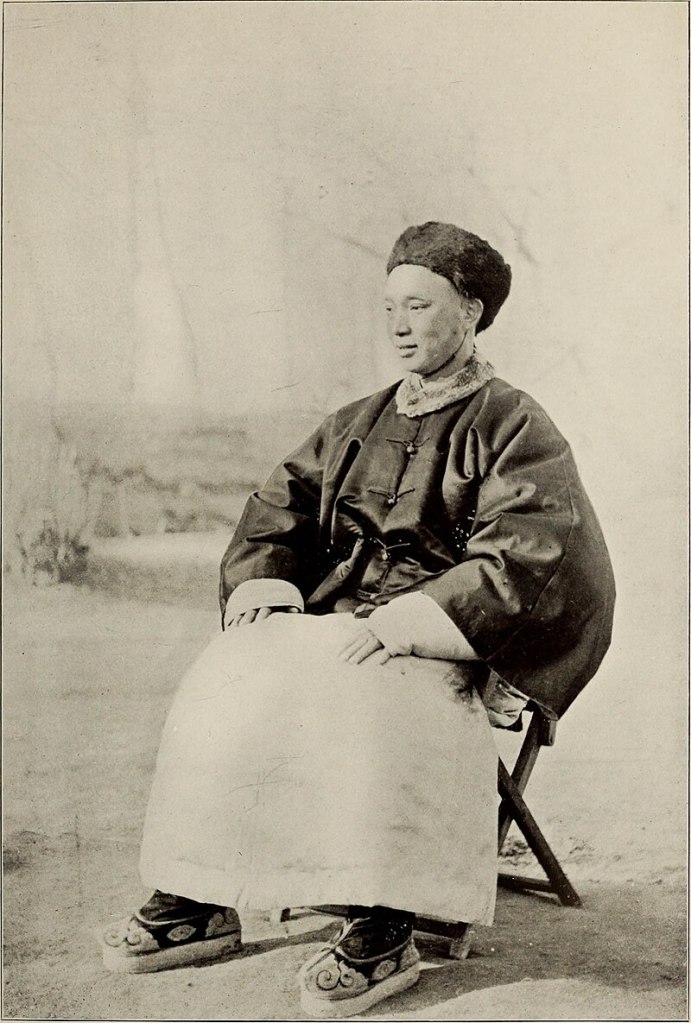

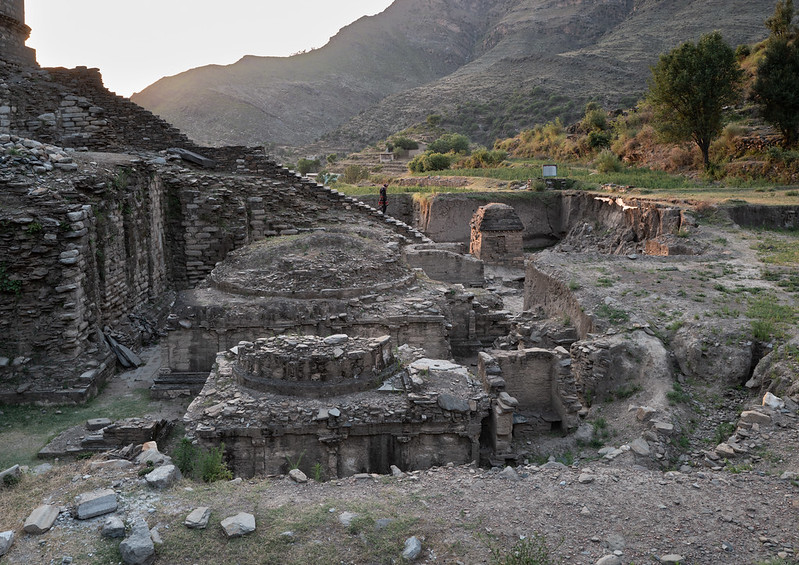
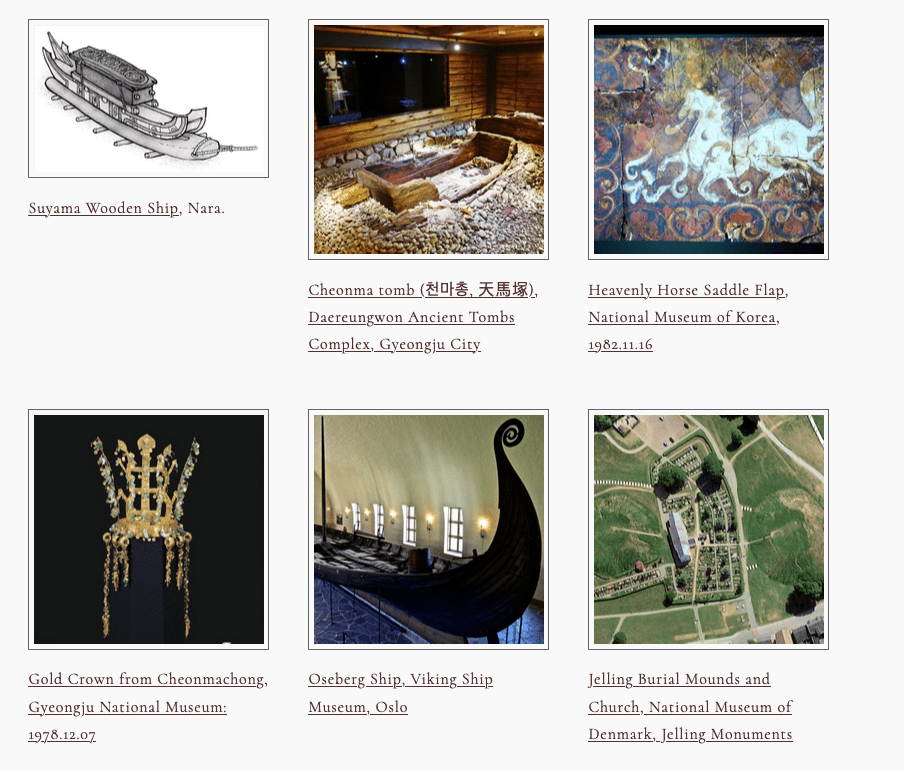


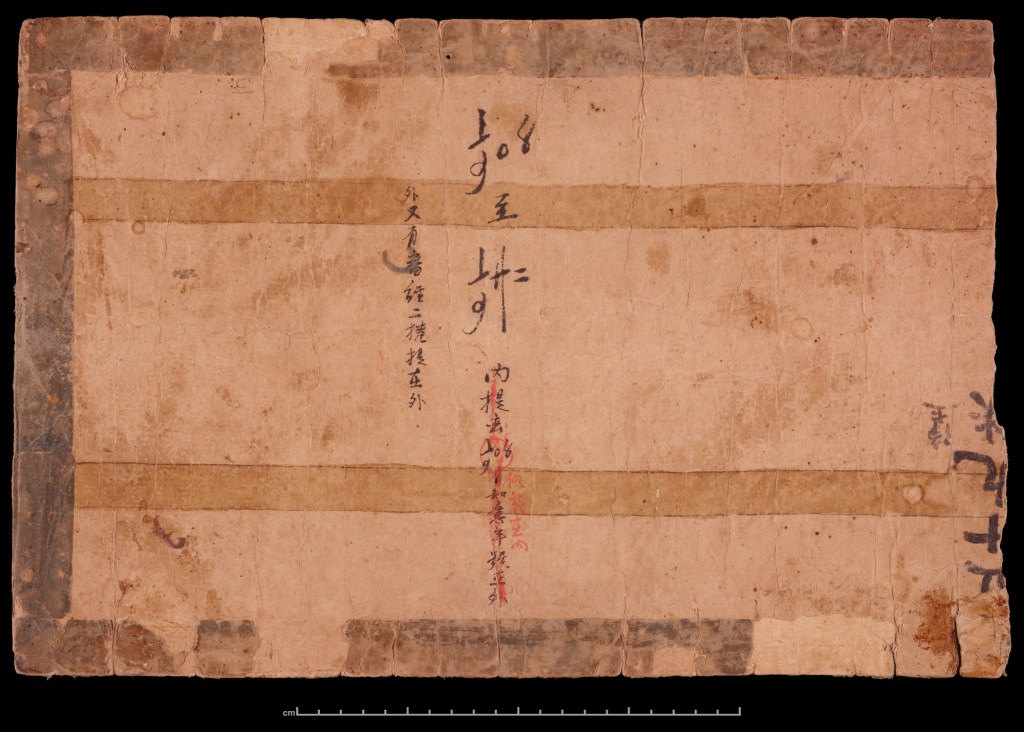
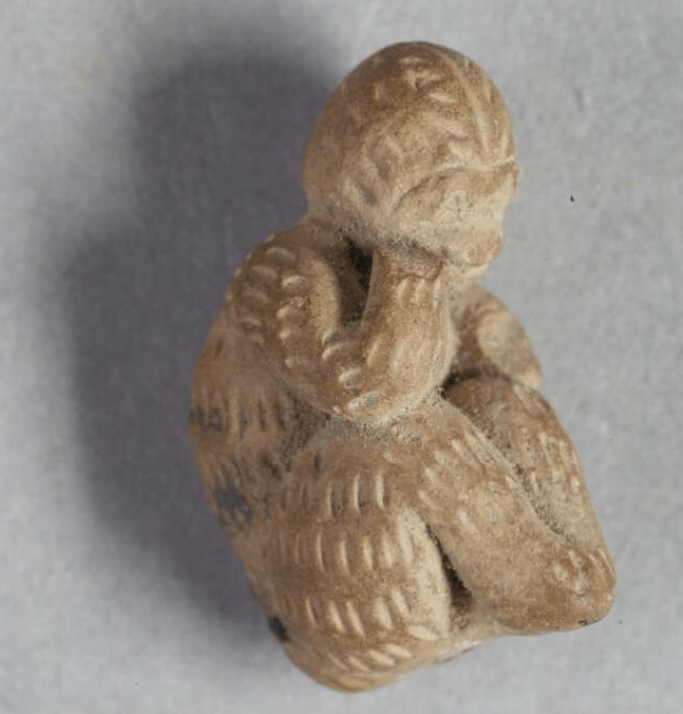

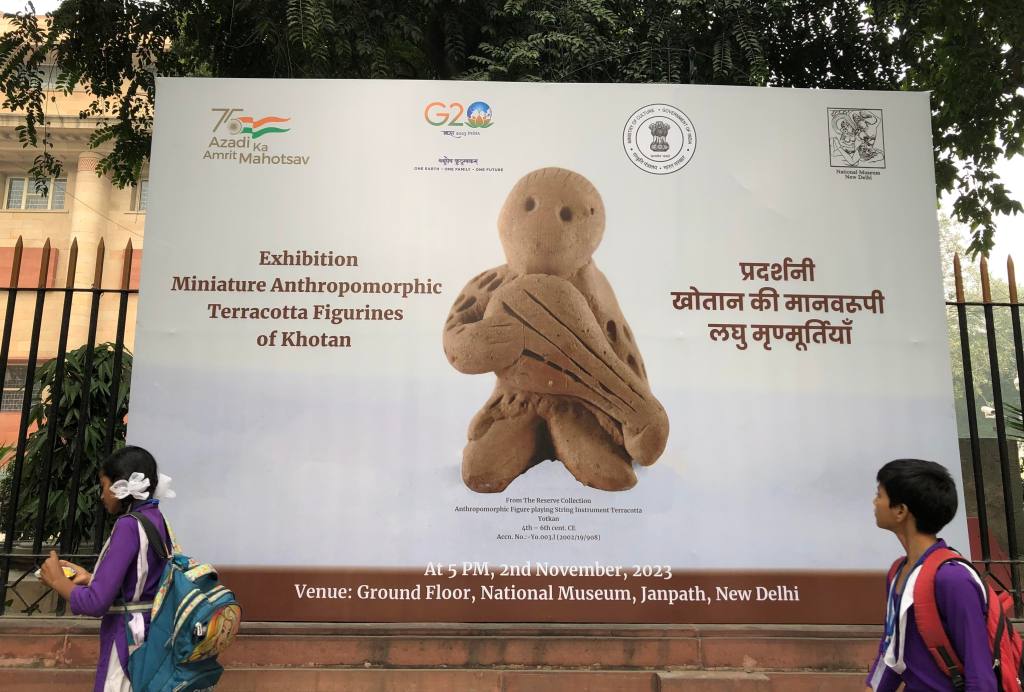


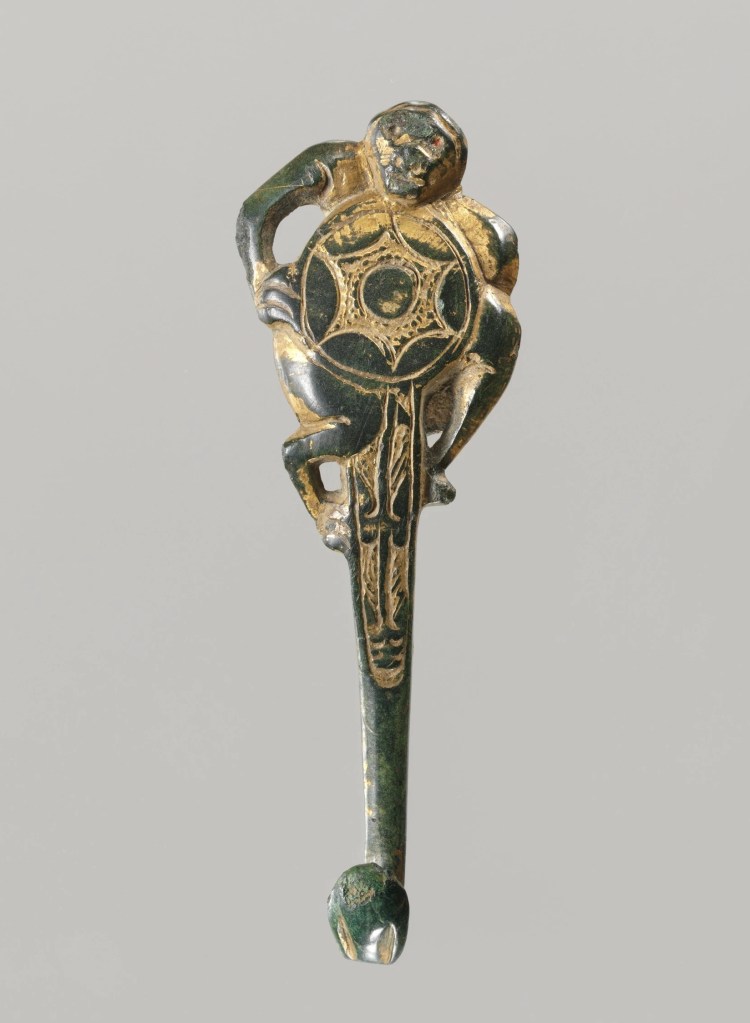


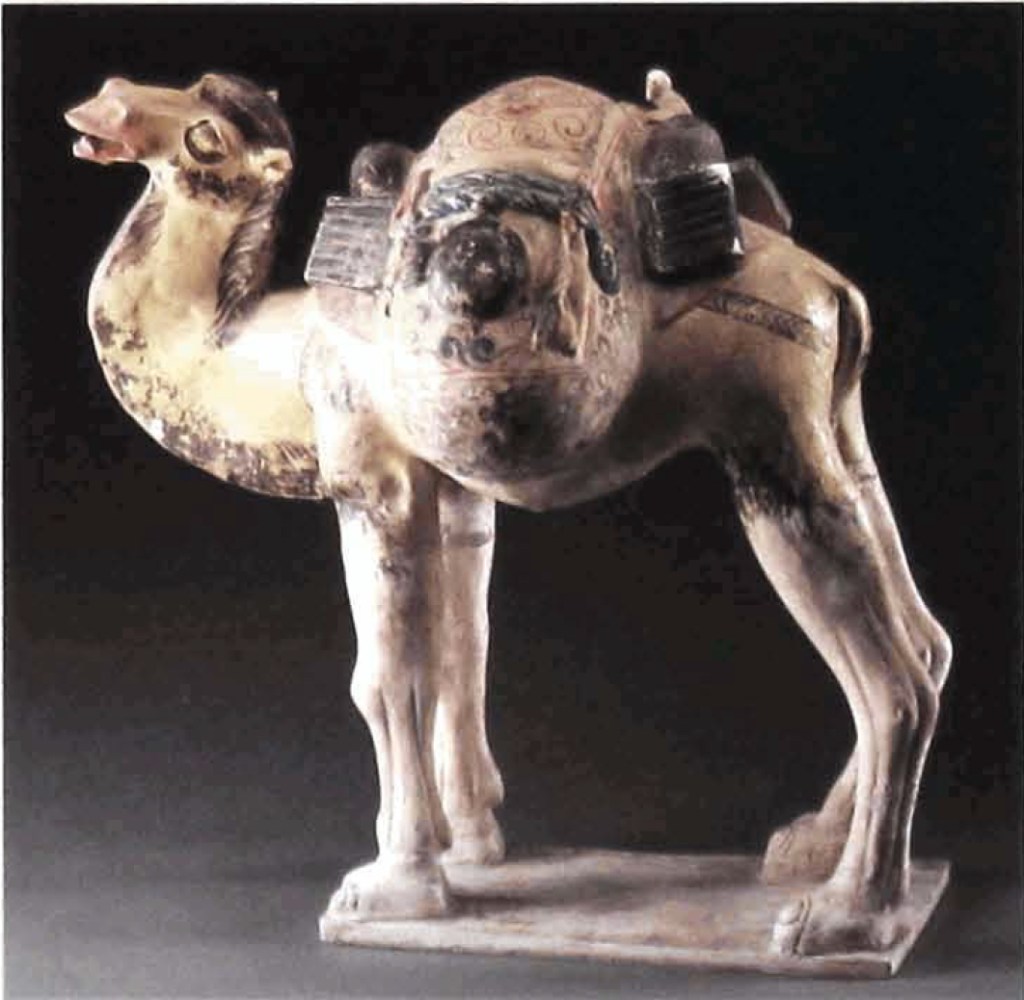
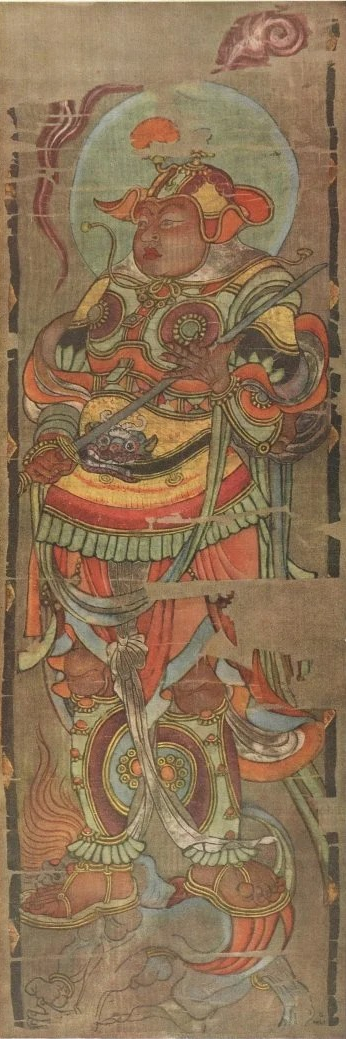

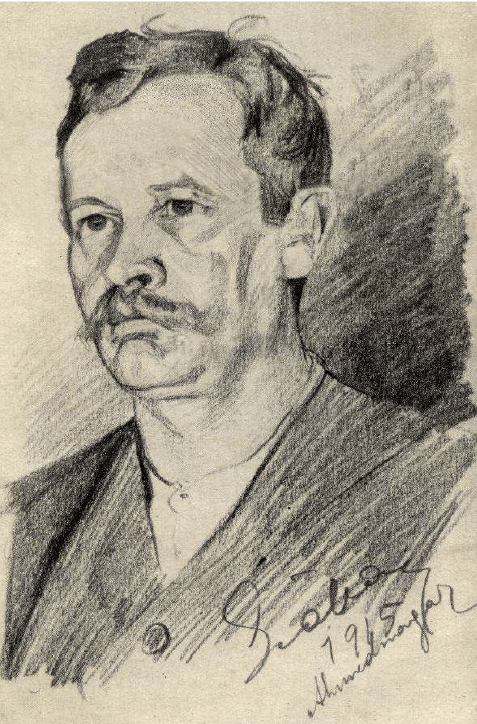
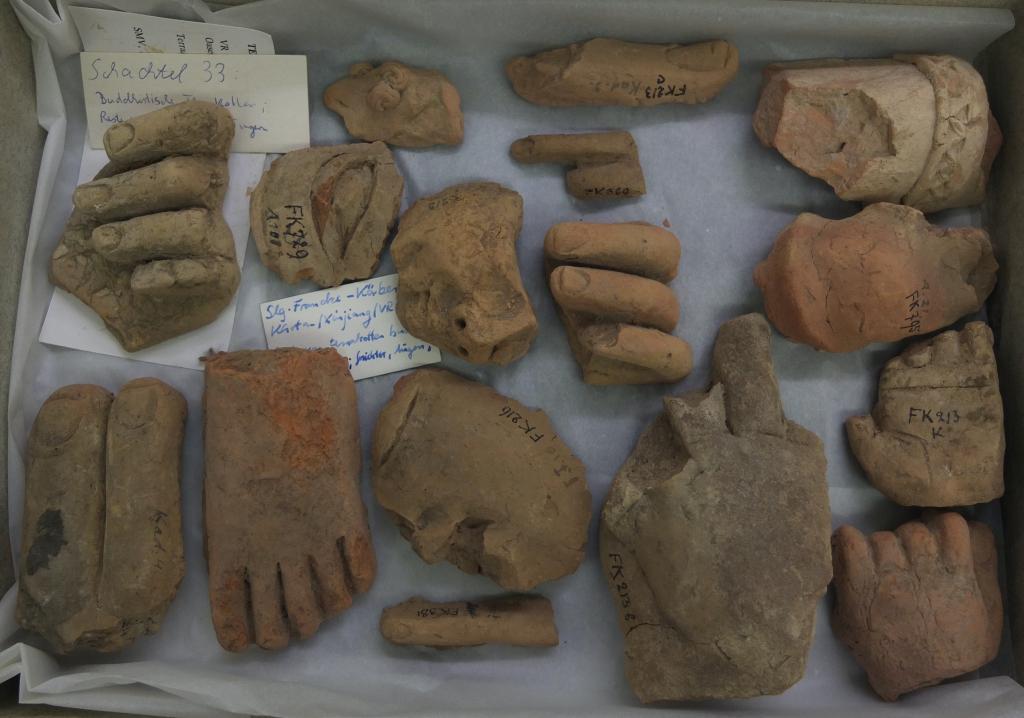
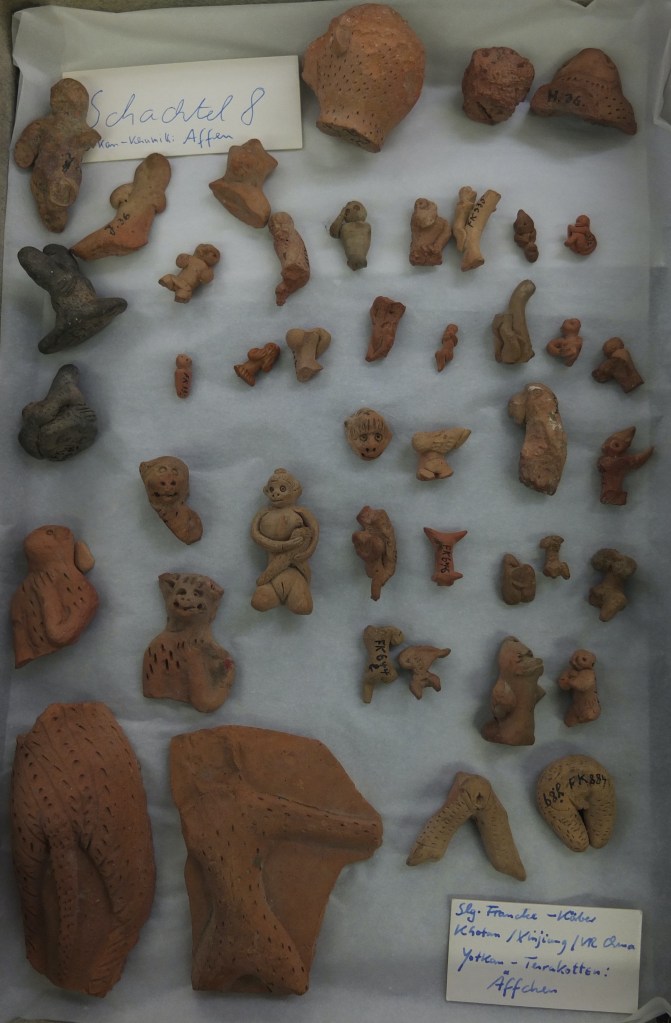


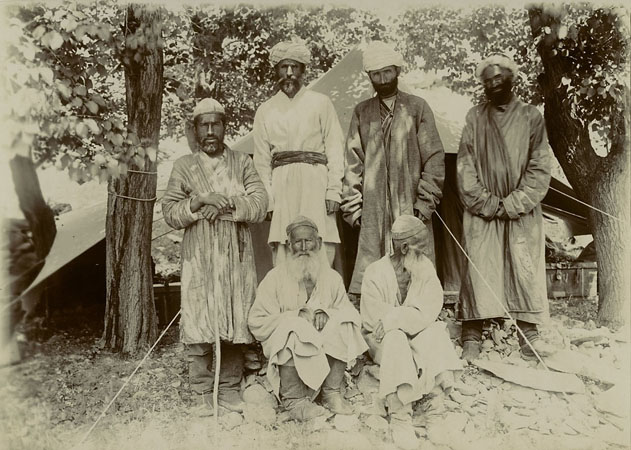

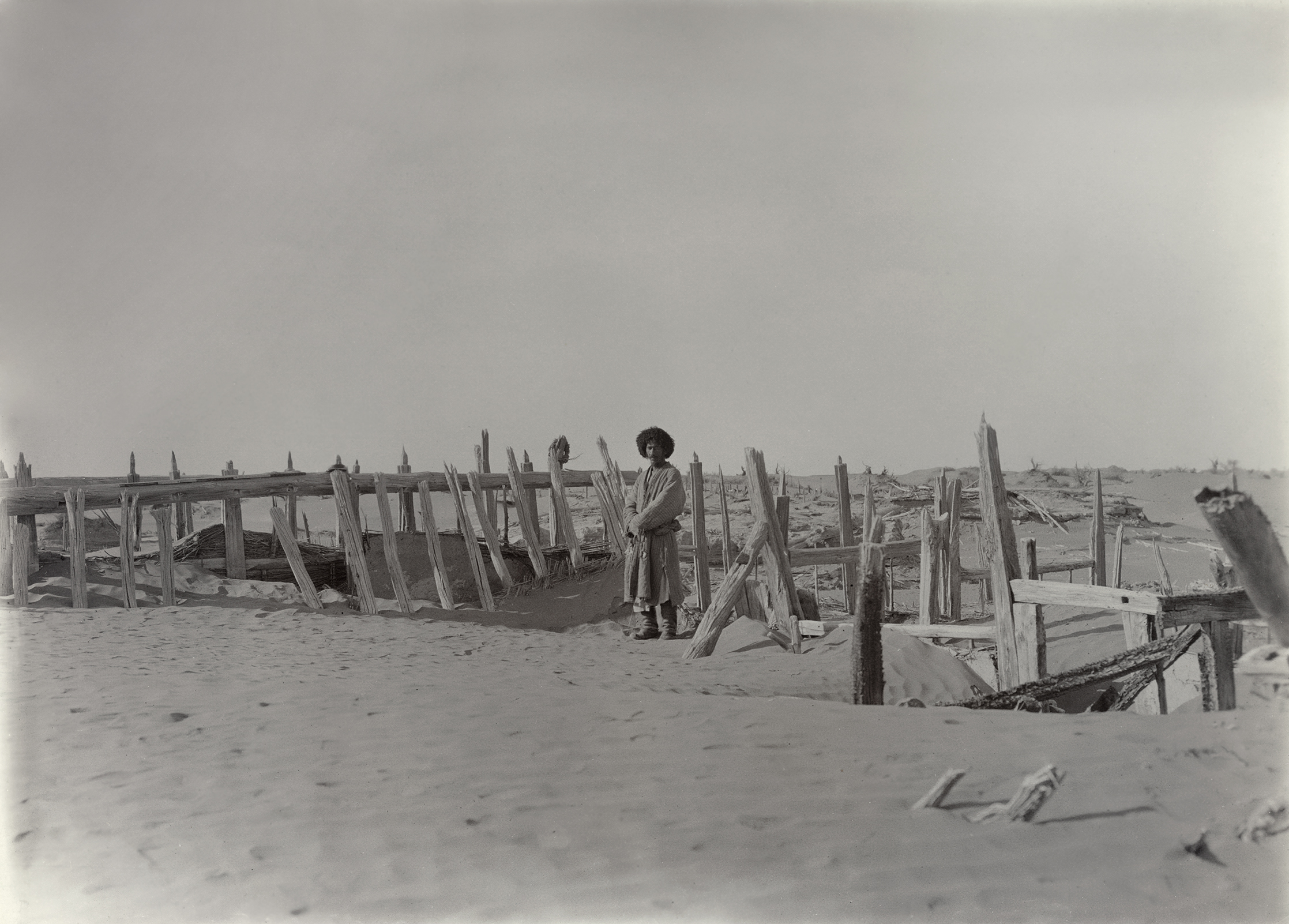


 Silk Road Digressions